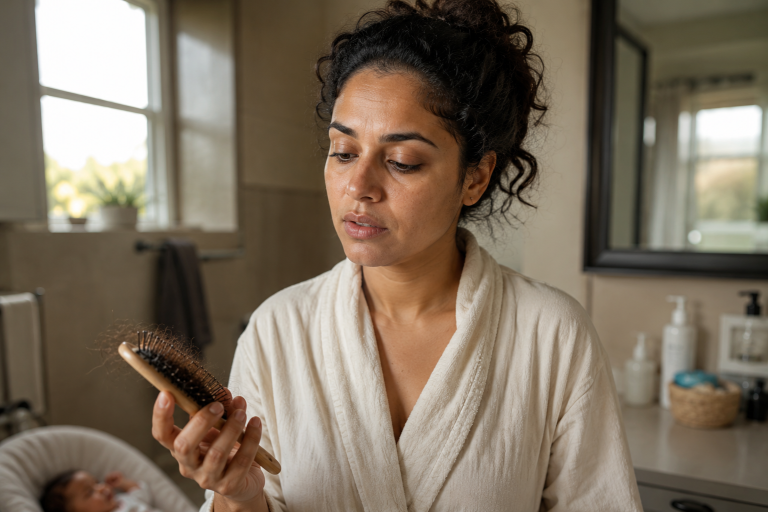
Finding hair everywhere after having a baby can feel scary.
You may notice it:
- In the shower
- On your pillow
- In your hairbrush
- On the bathroom floor
Sometimes it can feel like huge amounts of hair are falling out all at once.
The good news is that postpartum hair loss is very common.
For most women, it is temporary and improves over time.
According to Johns Hopkins Medicine, postpartum hair loss happens because hormone levels change after childbirth.
Even though it feels alarming, it usually does not mean you are going bald.
Table of Contents
ToggleWhat Is Postpartum Hair Loss?
Postpartum hair loss is a type of hair shedding that happens after giving birth.
The medical name is telogen effluvium.
This happens when many hairs move into the “resting” phase of the hair cycle at the same time.
A few months later, those hairs begin to fall out together.
This type of hair loss is usually:
- Temporary
- Spread across the scalp
- Most noticeable around the hairline and temples
For most women, the hair grows back over time.
Why Hair Gets Thicker During Pregnancy
Many women notice their hair feels fuller during pregnancy.
That happens because pregnancy hormones, especially estrogen, keep hair in the growth phase longer than usual.
Normally, people lose around 50 to 100 hairs each day.
During pregnancy, less hair falls out because more hairs stay in the growing phase.
That is why hair may look:
- Thicker
- Shinier
- Fuller
But this effect does not last forever.
Why Hair Falls Out After Birth
After delivery, hormone levels drop quickly.
As estrogen levels fall, all the extra hairs that stayed in the growth phase during pregnancy begin moving into the shedding phase.
A few months later, those hairs fall out.
This is why postpartum hair loss usually starts around 2 to 4 months after giving birth.
The American Academy of Dermatology explains that this type of shedding is extremely common after pregnancy.
Even though the amount of hair can feel shocking, the hair follicles are usually still healthy.
That means new hair can grow back.
When Does Postpartum Hair Loss Start?
Most women notice postpartum shedding between:
- 2 months postpartum
- 4 months postpartum
The shedding often becomes most noticeable around month 3 or 4.
You may especially notice:
- Hair collecting in the shower drain
- A wider hair part
- Thinner edges around the temples
- Loose hairs on clothing and pillows
This stage can feel stressful, but it is usually part of the normal postpartum hair cycle.
When Does Postpartum Hair Loss Stop?
For most women, the shedding slowly improves between 6 and 12 months after birth.
Small baby hairs often begin growing back around the hairline first.
Hair usually returns close to its normal fullness over time.
The exact timeline is different for everyone.
Some women recover sooner, while others notice shedding for longer.
What the New Research Found
A 2024 study published in the Journal of Clinical and Aesthetic Dermatology found something important.
Some women with postpartum hair shedding may also have another type of hair loss happening underneath, such as female pattern hair loss.
This matters because normal postpartum shedding should improve over time.
If hair loss continues past 12 months or seems focused mostly on the crown or hairline, it is a good idea to see a dermatologist.
That does not mean everyone with postpartum shedding has permanent hair loss.
It simply means ongoing thinning should be checked by a professional.
What Can Make Postpartum Hair Loss Worse?
Hormones are the main reason postpartum hair loss happens, but other things can make the shedding feel more intense.
Low Iron Levels
Low iron is one of the biggest causes of extra hair shedding after pregnancy.
Your body loses blood during childbirth, and pregnancy itself uses a lot of iron.
Low iron stores can make hair follicles weaker.
Some women have normal iron levels on basic blood tests but still have low ferritin levels, which measure stored iron.
That is why doctors sometimes check ferritin specifically when hair shedding is severe.
Thyroid Problems
Some women develop thyroid problems after giving birth.
This is called postpartum thyroiditis.
Thyroid issues can cause symptoms like:
- Hair loss
- Fatigue
- Mood changes
- Weight changes
- Feeling cold often
A study published in Cureus explains that thyroid dysfunction can affect hair growth and shedding.
If hair loss feels severe or comes with other symptoms, it is important to talk with your doctor.
Stress and Lack of Sleep
The postpartum period can be physically and emotionally exhausting.
Stress and poor sleep can affect the body in many ways, including hair growth.
This does not mean stress alone causes postpartum hair loss, but it may make shedding feel worse or last longer.
Tight Hairstyles
Tight ponytails, braids, extensions, and hairstyles that pull on the scalp can place extra stress on fragile postpartum hair.
Loose, gentle hairstyles are usually better during heavy shedding phases.
What May Actually Help
There is no instant cure for postpartum hair loss.
Most of the time, the body simply needs time for the hair cycle to reset naturally.
Still, some things may support healthy hair growth during recovery.
Eat Enough Protein
Hair is made mostly of protein.
Eating protein-rich foods may help support healthy hair growth.
Good options include:
- Eggs
- Greek yogurt
- Chicken
- Beans
- Fish
- Nuts
Keep Taking Your Prenatal Vitamin
Many doctors recommend continuing prenatal vitamins after birth, especially during breastfeeding.
Prenatal vitamins contain nutrients that support recovery after pregnancy.
Be Gentle With Your Hair
Try to avoid:
- Tight hairstyles
- Excessive heat styling
- Harsh chemical treatments
- Aggressive brushing
Use a wide-tooth comb when detangling wet hair.
Wet hair breaks more easily.
Check for Nutrient Deficiencies
Ask your healthcare provider whether bloodwork could help.
Important nutrients sometimes linked to hair shedding include:
- Iron
- Ferritin
- Vitamin D
- Vitamin B12
- Zinc
Correcting deficiencies may help support recovery.
Scalp Care
Gentle scalp massage may help increase blood flow to the scalp.
Even a few minutes during washing can feel relaxing and soothing.
What Usually Does Not Help
Many products promise fast hair growth after pregnancy.
Unfortunately, most shampoos and supplements cannot stop postpartum telogen effluvium immediately.
Biotin supplements are heavily advertised for hair growth, but true biotin deficiency is rare.
Also, high-dose biotin can interfere with certain blood test results, especially thyroid testing.
It is always best to speak with your doctor before starting supplements.
When Should You See a Doctor?
Postpartum hair shedding is usually normal.
But it is a good idea to see a healthcare provider if:
- Hair loss lasts longer than 12 months
- You notice bald patches
- Your scalp feels painful or inflamed
- You have severe fatigue or other symptoms
- Hair thinning keeps getting worse instead of improving
A dermatologist can help figure out whether something else may be contributing to the hair loss.
A Quick Note About the Emotional Side of Hair Loss
Postpartum hair loss is usually temporary.
But that does not mean it feels easy.
Losing hair during a time when your body already feels different can affect confidence and emotions in a very real way.
Many new moms already feel:
- Tired
- Overwhelmed
- Emotional
- Stressed
- Unsure about their changing bodies
Seeing large amounts of hair fall out can add even more stress.
If postpartum hair loss is upsetting you, that does not make you “dramatic” or vain.
Your feelings are valid.
Talking with your doctor, partner, friends, or a therapist may help if the stress starts affecting your mood or self-esteem.
Final Thoughts
Postpartum hair loss can feel alarming, especially when it happens suddenly.
But for most women, it is a normal part of the body adjusting after pregnancy.
The shedding usually starts a few months after birth, peaks around month 4, and slowly improves over time.
The most important things to remember are:
- The hair follicles are usually still healthy
- Most women see regrowth within a year
- Nutrition, rest, and gentle hair care may help support recovery
- Ongoing or severe hair loss should be checked by a doctor
Your body has been through an enormous amount.
Healing takes time.
And for most women, the hair does come back.
Healthy Avid shares educational wellness content designed to help women better understand their bodies and health. This article is for informational purposes only and should not replace medical advice from your healthcare provider.
Written by: Lauretta Iyamu, PharmD a Medical Writer and Clinical Researcher focused on women’s health, brain health, and evidence-based wellness communication.
Sources
Healthy Avid uses trusted medical organizations and peer-reviewed studies to support the information shared in our articles. Learn more about our editorial process.
- Postpartum telogen effluvium research — Study examining postpartum hair shedding and underlying hair loss conditions.
- Johns Hopkins Medicine postpartum hair loss guide — Overview of postpartum hair shedding and recovery.
- American Academy of Dermatology guide for new moms — Information on postpartum hair loss timelines and care tips.
- Hair shedding after pregnancy overview — Dermatologist explanation of telogen effluvium after stress and pregnancy.
- Postpartum hair loss causes and recovery — Overview of timelines, symptoms, and when to seek help.
- Thyroid dysfunction and hair disorders — Research discussing how thyroid problems can affect hair growth and shedding.