Some of the healthiest meals are also the easiest to make.
This anti-inflammatory pasta proves that simple ingredients can still taste rich, comforting, and exciting. You do not need heavy sauces or complicated cooking steps to make an incredible pasta dinner.
Instead, this recipe uses olive oil, garlic, tomatoes, spinach, and lemon to build flavor naturally.
The result is a pasta dish that tastes fresh and cozy at the same time.
Even better, it comes together in about 25 minutes.
Table of Contents
ToggleWhat Makes This Pasta Anti-Inflammatory?
Pasta itself is not automatically unhealthy.
What really changes the nutrition of a pasta dish is what you add to it.
This recipe pairs pasta with vegetables, healthy fats, herbs, and fiber-rich ingredients. That combination helps create a more balanced meal.
According to GlycanAge, pasta can fit into an anti-inflammatory Mediterranean-style eating pattern when eaten with foods like olive oil, leafy greens, and tomatoes.
This recipe follows those same ideas.
Why These Ingredients Work So Well Together
Every ingredient in this pasta adds both flavor and nutrition.
Extra Virgin Olive Oil
Olive oil creates the base of the sauce.
It gives the pasta richness without needing butter or heavy cream.
A study published in Nutrients found that olive oil may help support lower inflammation levels in the body.
Use good-quality extra virgin olive oil here because the flavor really shines through.
Garlic
Garlic adds deep flavor to the pasta.
When cooked slowly in olive oil, garlic becomes soft, sweet, and rich instead of sharp.
Garlic also contains natural sulfur compounds linked to immune support.
The key is cooking it gently. Burned garlic tastes bitter very quickly.
Cherry Tomatoes
Cherry tomatoes naturally create the sauce.
As they cook, they burst open and release their juices into the olive oil.
Tomatoes also contain lycopene, an antioxidant studied for its role in reducing oxidative stress.
Cooking tomatoes helps your body absorb lycopene more easily.
Spinach
Spinach adds fiber, vitamins, iron, and color to the dish.
It wilts quickly into the warm pasta and helps the meal feel lighter and fresher.
Lemon
Fresh lemon juice balances the richness of the olive oil and garlic.
Lemon also adds vitamin C and a bright fresh flavor that lifts the whole dish.
Chili Flakes, Capers, and Olives
These small ingredients add huge flavor.
- Chili flakes add warmth
- Capers add brightness
- Olives add a rich savory taste
Together, they make the pasta taste restaurant-quality without extra work.
The Recipe
Serves: 4
Prep time: 10 minutes
Cook time: 15 minutes
Total time: 25 minutes
Ingredients
For the Pasta
- 12 ounces whole grain spaghetti, linguine, or chickpea pasta
- Salt for pasta water
For the Sauce
- 4 tablespoons extra virgin olive oil
- 6 garlic cloves, thinly sliced
- 1 pound cherry tomatoes, halved
- ¼ teaspoon chili flakes
- ¼ cup chopped Kalamata olives
- 2 tablespoons capers
- 4 cups baby spinach
- Juice and zest of 1 lemon
- Salt and black pepper to taste
- ½ teaspoon dried oregano
- Handful of fresh basil leaves
Optional Add-Ins
- Flaked salmon
- White beans
- Grilled chicken
- Parmesan cheese
- Toasted walnuts or pine nuts
- Balsamic glaze
Step-by-Step Instructions
Step 1: Cook the Pasta
Bring a large pot of water to a boil.
Add plenty of salt to the water. This helps flavor the pasta while it cooks.
Cook the pasta until just before al dente.
Before draining, save 1 cup of pasta water.
The starchy pasta water helps create a smooth sauce later.
Step 2: Cook the Garlic Slowly
While the pasta cooks, heat the olive oil in a large skillet over medium-low heat.
Add the sliced garlic and chili flakes.
Cook gently for about 3 to 4 minutes, stirring often.
The garlic should become soft and lightly golden. Do not rush this step.
Slow-cooked garlic tastes sweet and rich. Burned garlic turns bitter very fast.
Step 3: Burst the Tomatoes
Add the cherry tomatoes to the skillet.
Season with:
- Salt
- Black pepper
- Oregano
Cook for about 5 minutes.
The tomatoes will soften and burst open as they cook. Press some of them gently with the back of a spoon to release more juice.
The tomato juices mix with the olive oil and garlic to create a light silky sauce.
Add the olives and capers and stir everything together.
At this point, the kitchen smells amazing.
Step 4: Combine the Pasta and Sauce
Add the drained pasta directly into the skillet.
Pour in some of the reserved pasta water and toss everything together.
The pasta water helps the olive oil and tomato juices coat the pasta evenly instead of sitting at the bottom of the pan.
Add more pasta water if needed until the sauce looks glossy and smooth.
Stir in:
- Lemon juice
- Lemon zest
The lemon brightens the flavor and keeps the dish from feeling too heavy.
Step 5: Add the Spinach
Turn off the heat.
Add the spinach a handful at a time and toss until wilted.
The heat from the pasta softens the spinach quickly without overcooking it.
Add the fresh basil last.
Taste and adjust the seasoning if needed.
Step 6: Serve
Divide the pasta into bowls.
Top with any extras you like such as:
- Salmon
- White beans
- Parmesan
- Toasted walnuts
- Balsamic glaze
Finish with a drizzle of olive oil before serving.
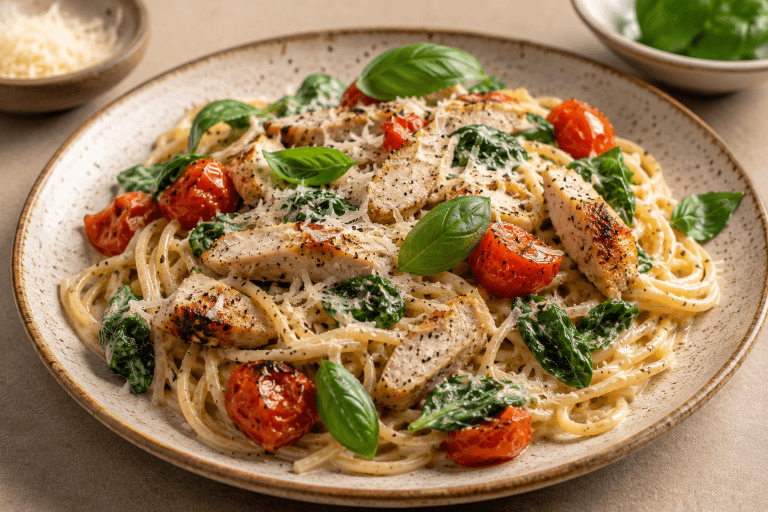
The final pasta tastes fresh, garlicky, rich, and bright all at once.
Easy Protein Additions
This pasta already has healthy fats and fiber. Adding protein makes it even more filling.
Salmon
Salmon is one of the best additions because it contains omega-3 fats linked to lower inflammation levels.
Cook salmon separately and flake it over the pasta before serving.
White Beans
White beans are fast, affordable, and easy.
They add plant protein and fiber while blending smoothly into the sauce.
Chicken
Grilled or pan-cooked chicken works very well in this recipe.
Season it simply with garlic, oregano, salt, and olive oil.
Lentils
Cooked lentils add fiber, protein, and a slightly earthy flavor that pairs well with tomatoes and garlic.
Choosing the Best Pasta
The type of pasta you use can change the nutrition of the meal.
Whole Grain Pasta
Whole grain pasta contains more fiber than regular white pasta.
It also has a slightly nutty flavor that works really well with garlic and olive oil.
Chickpea Pasta
Chickpea pasta contains extra protein and fiber.
It can help make the meal more filling and support steadier energy levels.
Lentil Pasta
Lentil pasta is another high-protein option.
Red lentil pasta has a softer flavor and texture that feels closest to traditional pasta.
Regular Pasta
You can still use regular pasta if that is what you already have.
The vegetables, olive oil, and protein additions still help create a balanced meal.
Make-Ahead and Storage Tips
This pasta stores well in the fridge for up to 3 days.
Keep leftovers in an airtight container.
When reheating, add a splash of water or olive oil to loosen the sauce.
The flavors often taste even better the next day because the garlic, tomatoes, and lemon continue blending together.
You can also freeze the sauce without the pasta for up to 3 months.
Cook fresh pasta when ready to serve.
Nutrition Per Serving
Estimated nutrition for one serving made with whole grain pasta:
- Calories: 480
- Protein: 14g
- Carbohydrates: 58g
- Fiber: 9g
- Fat: 18g
- Vitamin C: 45% Daily Value
- Iron: 20% Daily Value
- Magnesium: 22% Daily Value
Adding salmon, chicken, lentils, or beans increases the protein even more.
Why This Pasta Fits Into a Balanced Diet
This recipe follows many ideas used in Mediterranean-style eating.
The focus stays on:
- Olive oil
- Vegetables
- Herbs
- Fiber-rich foods
- Simple ingredients
According to Inflammation Academy, meals built around olive oil, vegetables, herbs, and garlic can fit into an anti-inflammatory eating pattern.
This pasta also feels realistic for everyday life.
You do not need expensive ingredients or advanced cooking skills.
Most of the flavor comes from simple cooking methods like slowly cooking garlic and letting the tomatoes burst naturally in the pan.
That is what makes this recipe easy to come back to again and again.
It feels cozy, fresh, and satisfying without feeling too heavy afterward.
Frequently Asked Questions
Is pasta inflammatory?
Pasta itself is not automatically inflammatory.
The overall meal is more important. Pairing pasta with vegetables, healthy fats, fiber, and protein creates a more balanced dish.
What is the healthiest pasta for inflammation?
Whole grain, chickpea, and lentil pasta are all great choices because they contain more fiber and protein than refined white pasta.
Can I make this recipe gluten-free?
Yes.
Use chickpea pasta, lentil pasta, or your favorite gluten-free pasta.
Can I add more vegetables?
Absolutely.
Good additions include:
- Mushrooms
- Zucchini
- Kale
- Broccoli
- Roasted red peppers
How can I make this pasta higher in protein?
Add:
- Salmon
- Chicken
- White beans
- Lentils
- Tofu
These additions help make the meal more filling.
Healthy Avid shares educational wellness content designed to help women better understand nutrition and overall health. This article is for informational purposes only and should not replace medical advice from your healthcare provider.
Written by: Lauretta Iyamu, PharmD, a Medical Writer and Clinical Researcher focused on women’s health, brain health, and evidence-based wellness communication.
Sources
Healthy Avid uses trusted medical organizations, peer-reviewed studies, and evidence-based nutrition sources to support the information shared in our articles. Learn more about our editorial process.
- Does pasta cause inflammation? — GlycanAge article explaining how pasta can fit into a Mediterranean-style eating pattern.
- Anti-inflammatory pasta recipe ideas — Inflammation Academy guide discussing ingredients commonly used in anti-inflammatory pasta meals.
- Effects of olive oil on inflammation markers — Study published in Nutrients examining olive oil and inflammation.
- Gut microbiota and metabolic health — Research discussing gut health and metabolic function.
- Vitamin D, inflammation, and insulin resistance — Review exploring inflammation and metabolic health connections.