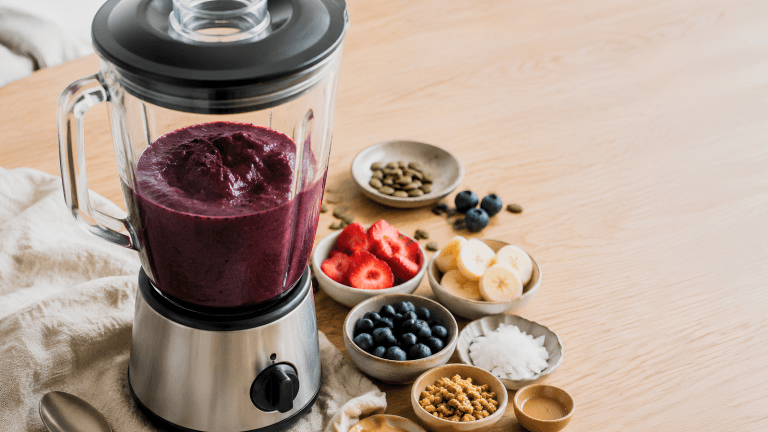
Smoothie bowls may look like something you need to order at a juice bar.
You don’t.
With frozen fruit, a little liquid, and a few toppings, you can make one at home in minutes.
The trick is keeping the base thick enough to eat with a spoon.
You can also add yogurt, seeds, or nut butter to make your bowl more filling.
These easy smoothie bowl recipes for beginners use simple ingredients and realistic toppings.
No perfect fruit arrangement required.
What Makes a Good Smoothie Bowl?
A basic smoothie bowl has four parts:
- A thick frozen base
- A protein source
- An optional nutrition boost
- Toppings
Once you understand this formula, you can make dozens of combinations.
1. Start With Frozen Fruit
Frozen fruit gives a smoothie bowl its thick, creamy texture.
Frozen banana is especially useful.
It blends into a soft, creamy base without needing much liquid.
You can also use:
- frozen berries
- mango
- pineapple
- cherries
- açaí
- dragon fruit
- avocado
You do not need every ingredient frozen.
But most of the fruit should be cold and firm.
2. Add Protein to Your Smoothie Bowl
Fruit gives you vitamins, minerals, fiber, and carbohydrates.
Adding protein can make breakfast more satisfying.
Easy choices include:
- plain Greek yogurt
- protein powder
- nut butter
- hemp seeds
- soy yogurt
Greek yogurt is especially useful because it adds protein while making the bowl thicker.
Hemp seeds also provide plant protein and healthy fats.
3. Add an Optional Nutrition Boost
You can blend in small amounts of foods such as:
- spinach
- chia seeds
- ground flaxseed
- pumpkin seeds
- cacao powder
These ingredients can add nutrients without making breakfast complicated.
4. Finish With Simple Smoothie Bowl Toppings
Toppings add crunch and flavor.
Try:
For crunch: granola, nuts, pumpkin seeds
For fruit: berries, kiwi, banana, mango
For healthy fats: nut butter, walnuts, chia seeds
For something extra: coconut flakes or cacao nibs
You do not need six toppings.
Two or three are plenty.
The Thick Smoothie Bowl Secret
Use mostly frozen fruit and very little liquid.
Add milk one tablespoon at a time.
You can always add more liquid. You cannot easily take it back out.
Smoothie Bowl Tips for Beginners
A few small tricks can make your first smoothie bowl much easier.
Freeze Bananas in Pieces
Peel ripe bananas before freezing them.
Cut them into chunks and store them in a freezer bag.
Small pieces blend much faster than a whole frozen banana.
Prep Your Toppings Before Blending
A thick smoothie bowl starts melting as soon as it leaves the blender.
Slice your fruit and set out toppings first.
Then blend the base.
Use Less Liquid Than You Think
A smoothie bowl should be much thicker than a drinking smoothie.
Start with a small splash.
If the blender stops moving, add one spoonful at a time.
Chill Your Bowl
Put your serving bowl in the freezer for about five minutes.
A cold bowl helps your smoothie stay thick while you add toppings.
12 Easy Smoothie Bowl Recipes for Beginners
Each recipe makes about one generous bowl.
The exact amount of liquid will depend on your blender.
Start small.
You can always add more.
1. Classic Açaí Smoothie Bowl
Best for: a simple berry breakfast
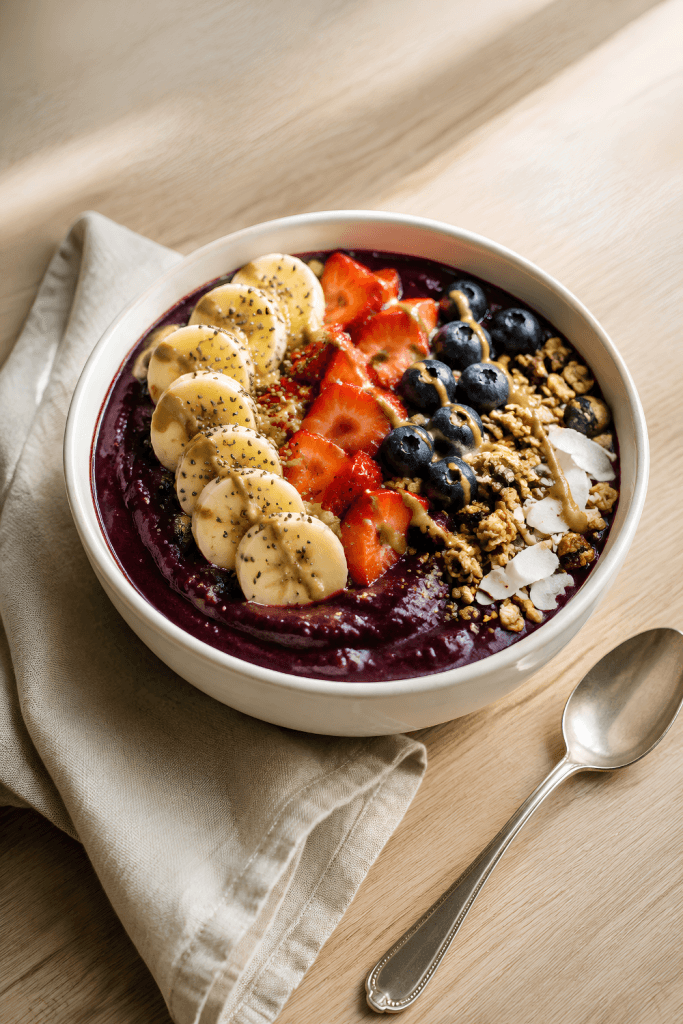
Base:
- 1 unsweetened frozen açaí packet
- 1 frozen banana
- ½ cup frozen mixed berries
- small splash of unsweetened almond milk
Optional protein: ½ cup plain Greek yogurt or vanilla protein powder
Toppings: banana slices, strawberries, granola, coconut flakes, nut butter
Açaí contains plant compounds called polyphenols.
A study found that açaí contains anthocyanins and other antioxidant compounds, although human health research is still developing.
Beginner tip: Choose an unsweetened frozen açaí packet so you control how sweet your bowl becomes.
2. Tropical Mango Smoothie Bowl
Best for: bright flavor and quick mornings
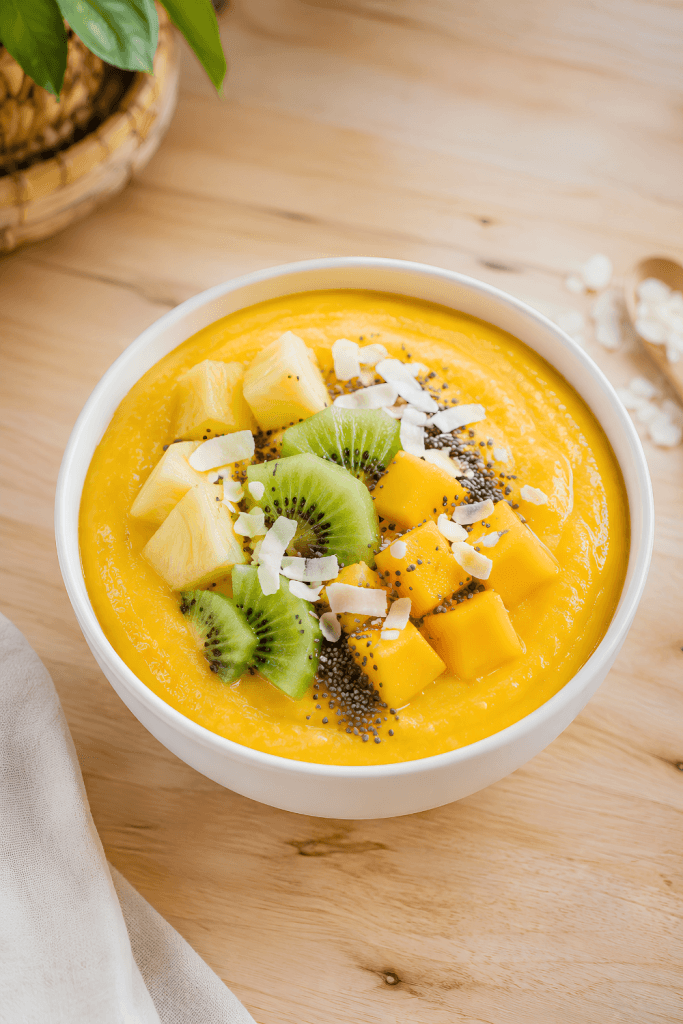
Base:
- 1 cup frozen mango
- 1 frozen banana
- ½ cup frozen pineapple
- small splash of light coconut milk
Optional protein: plain or coconut yogurt
Toppings: kiwi, pineapple, chia seeds, coconut flakes
Mango and kiwi are useful sources of vitamin C.
The mix of frozen mango and banana also creates a creamy base without much liquid.
Beginner tip: If your mango is already very sweet, you probably do not need honey.
3. Berry Protein Smoothie Bowl
Best for: a higher-protein breakfast
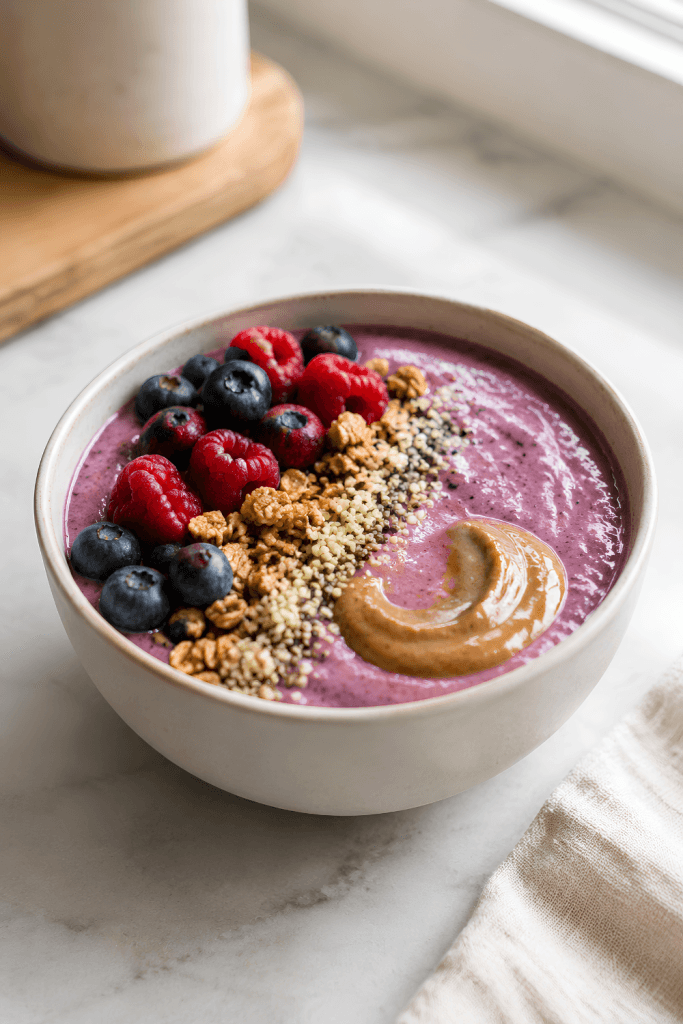
Base:
- 1 cup frozen mixed berries
- 1 frozen banana
- ½ cup plain Greek yogurt
Optional protein: vanilla protein powder or 1 tablespoon nut butter
Toppings: blueberries, hemp seeds, granola, nut butter
Blueberries contain anthocyanins, a group of colorful plant compounds studied for their possible role in brain and heart health. A review of blueberry research describes blueberries as a rich source of these compounds.
Greek yogurt also makes this bowl thicker.
You may find you do not need protein powder at all.
This can also be an easy breakfast after strength training for women.
4. Green Smoothie Bowl With Spinach
Best for: adding greens without a strong vegetable taste
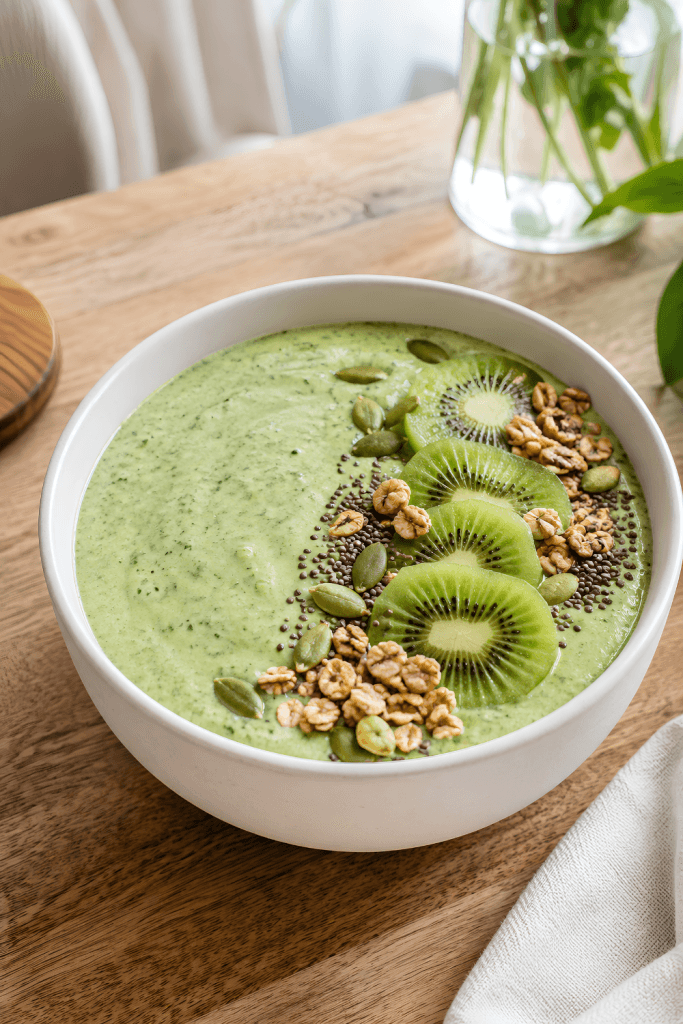
Base:
- 1 frozen banana
- ¾ cup frozen mango
- large handful of fresh spinach
- small splash of oat milk
Optional protein: 2 tablespoons hemp seeds or vanilla protein powder
Toppings: kiwi, pumpkin seeds, chia seeds, granola
The mango and banana help cover the taste of spinach.
Spinach provides nonheme iron, which is the type of iron found in plant foods.
Vitamin C helps your body absorb this type of iron more easily, so adding kiwi or berries is useful. Research on the interaction between vitamin C and iron supports pairing the two in the same meal.
For more food ideas, see iron-rich foods for women who feel tired.
Beginner tip: Start with a small handful of spinach. Add more once you know you enjoy it.
5. Pitaya Dragon Fruit Smoothie Bowl
Best for: a colorful beginner smoothie bowl
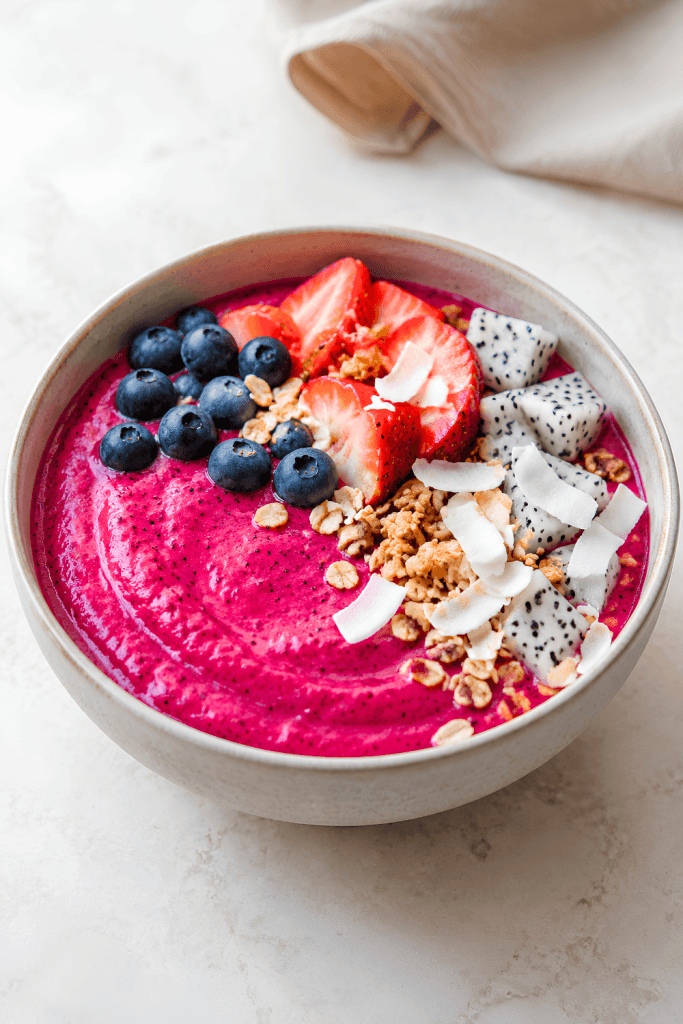
Base:
- 1 frozen pitaya packet
- 1 frozen banana
- ½ cup frozen strawberries
- small splash of coconut water
Optional protein: Greek yogurt or coconut yogurt
Toppings: blueberries, granola, fresh dragon fruit, lime zest
Pitaya is also called dragon fruit.
The bright pink-red color in red pitaya comes from pigments called betalains.
A review of betalain compounds describes them as natural plant pigments with antioxidant activity.
Beginner tip: Pitaya is mild in flavor. Banana and strawberries make the bowl sweeter without needing much added sugar.
6. Peanut Butter Banana Smoothie Bowl
Best for: true beginners and a simple comfort breakfast
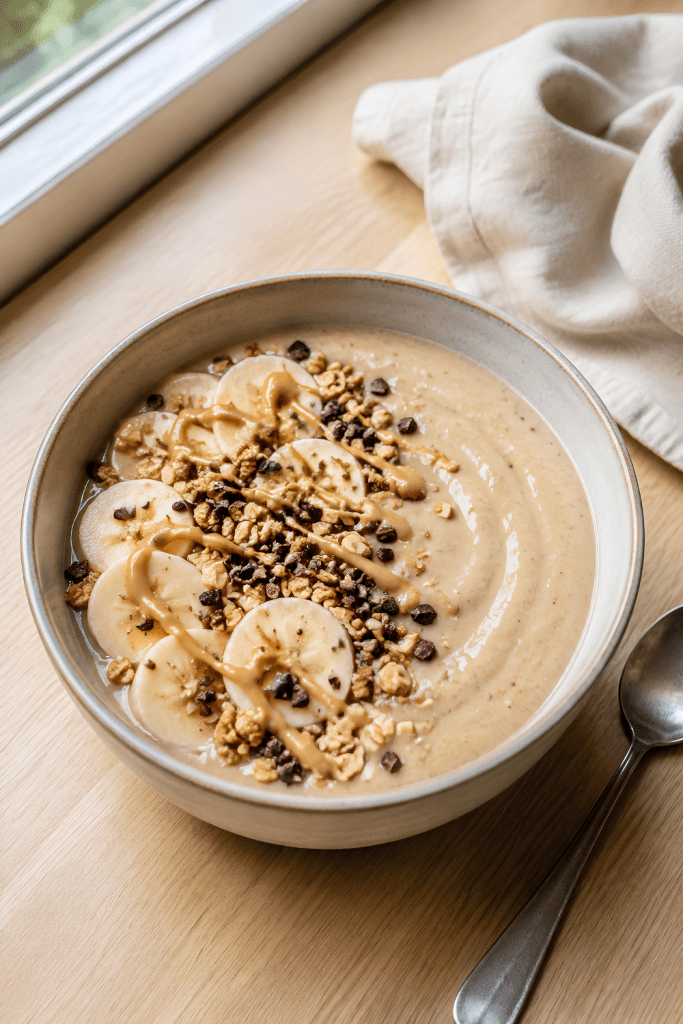
Base:
- 1½ frozen bananas
- 2 tablespoons natural peanut butter
- small splash of oat milk
Optional protein: vanilla protein powder or plain Greek yogurt
Toppings: banana slices, granola, crushed peanuts, cacao nibs
Peanut butter and bananas both provide some magnesium.
Magnesium supports normal muscle and nerve function and takes part in hundreds of body processes, according to the NIH magnesium fact sheet.
That does not make this bowl a sleep treatment.
It is simply an easy way to include magnesium-containing foods in your day.
For a closer look at the evidence, read about magnesium and sleep.
Beginner tip: Peanut butter makes this bowl thick very quickly. Add only a tiny amount of milk at first.
7. Chocolate Cherry Smoothie Bowl
Best for: a chocolate-flavored breakfast with fruit
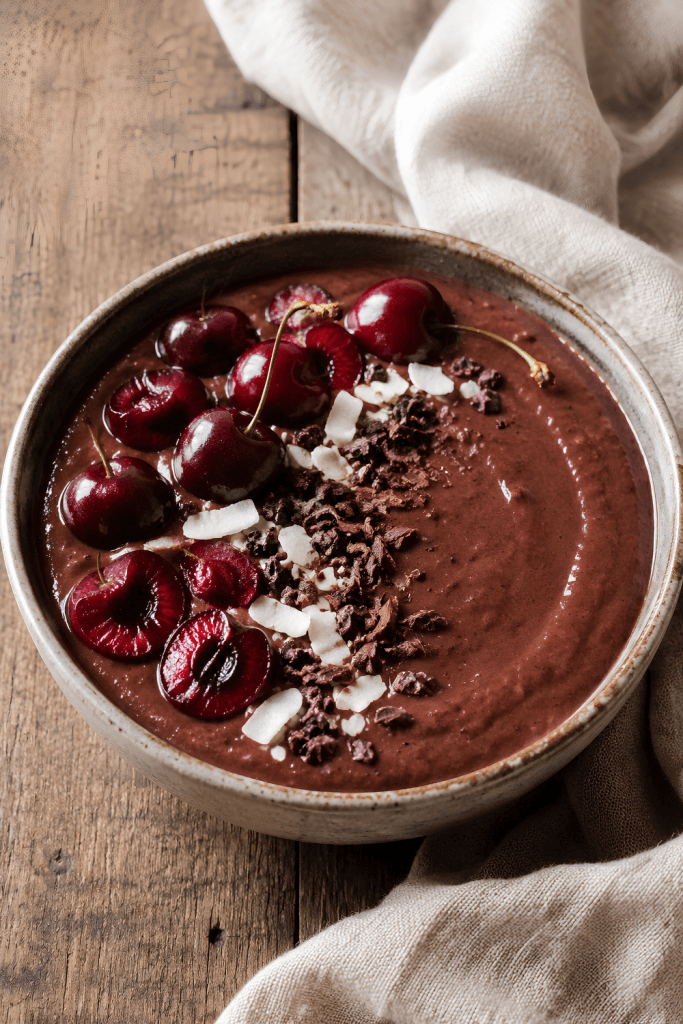
Base:
- 1 cup frozen cherries
- 1 frozen banana
- 1 tablespoon unsweetened cacao powder
- small splash of oat milk
Optional protein: plain Greek yogurt or chocolate protein powder
Toppings: fresh cherries, cacao nibs, coconut flakes, or a small amount of dark chocolate
Tart cherries naturally contain melatonin and plant compounds called anthocyanins.
Small human studies have explored whether tart cherry juice may support sleep.
That does not mean a cherry smoothie bowl treats insomnia.
Think of cherries as nutritious food, not a sleep medicine.
Beginner tip: Unsweetened cacao can taste bitter. Start with one tablespoon.
8. Blueberry Lavender Smoothie Bowl
Best for: a simple berry breakfast
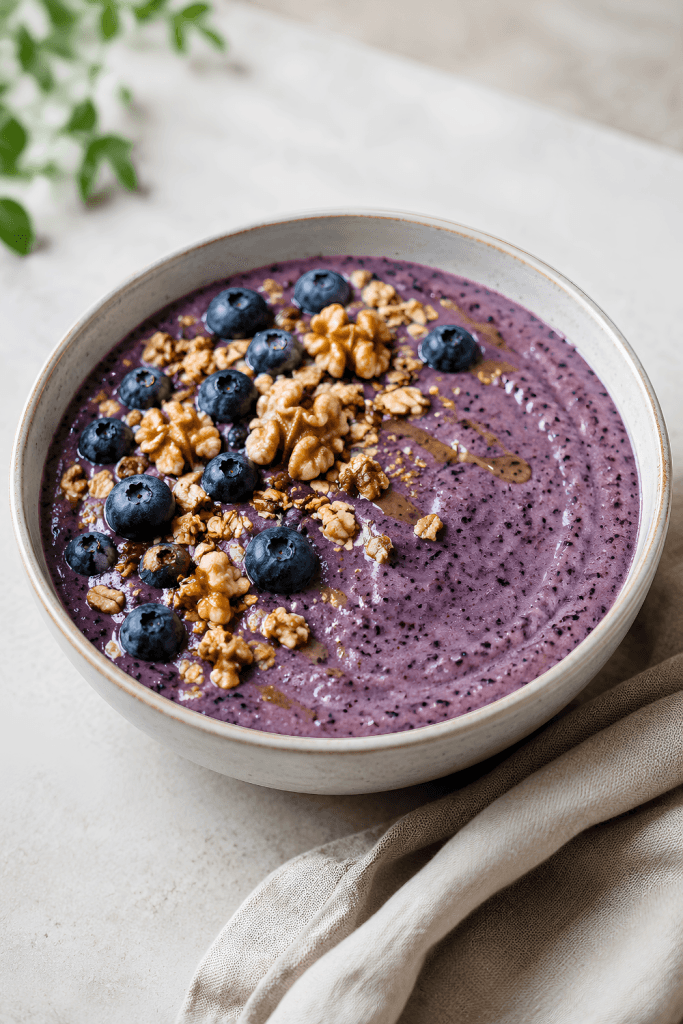
Base:
- 1 cup frozen blueberries
- 1 frozen banana
- small splash of oat milk
- tiny drop of food-grade lavender extract, optional
Optional protein: Greek yogurt, vanilla protein powder, or hemp seeds
Toppings: blueberries, walnuts, granola, and a light honey drizzle
Blueberries contain anthocyanins and other polyphenols.
You do not need lavender to get the benefits of the fruit.
Beginner tip: Lavender has a strong flavor. Use very little or leave it out.
9. Pumpkin Spice Smoothie Bowl
Best for: cool mornings and a fall-inspired breakfast
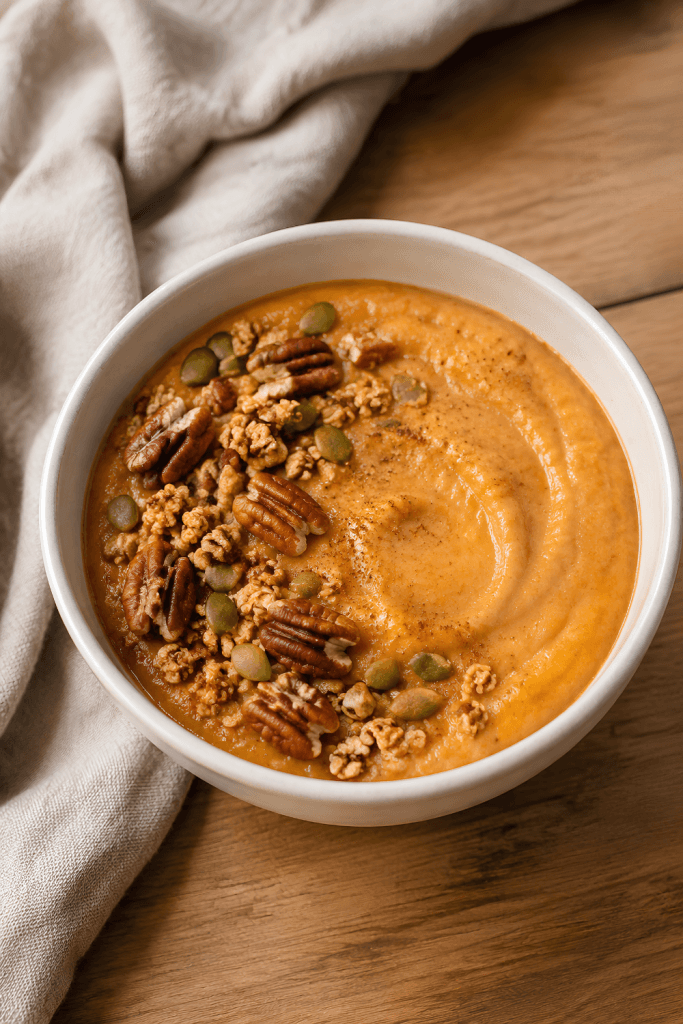
Base:
- ½ cup plain canned pumpkin
- 1 frozen banana
- ½ teaspoon pumpkin pie spice
- small splash of oat milk
Optional protein: Greek yogurt, vanilla protein powder, or almond butter
Toppings: pumpkin seeds, pecans, granola, and cinnamon
Pumpkin gives the bowl fiber and beta-carotene.
Pumpkin seeds add protein, magnesium, iron, and zinc.
The NIH zinc nutrition guide lists pumpkin seeds as a useful plant source of zinc, a mineral your body needs for immune function and cell growth.
Beginner tip: Use plain pumpkin puree, not pumpkin pie filling.
10. Strawberry Cheesecake Smoothie Bowl
Best for: a dessert-like breakfast
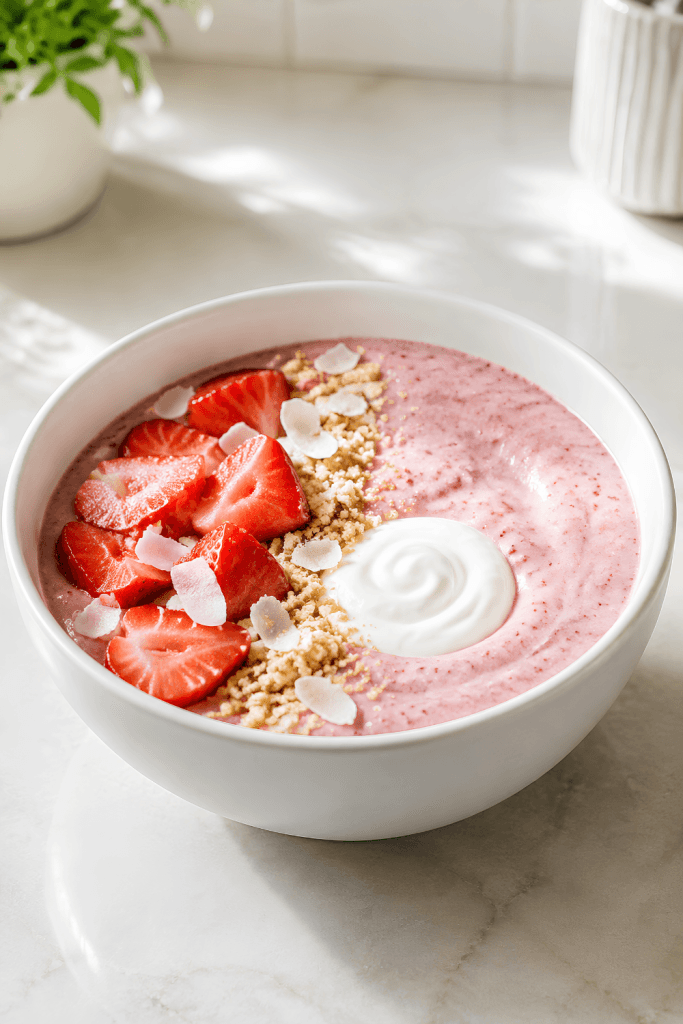
Base:
- 1 cup frozen strawberries
- 1 frozen banana
- 2 tablespoons cream cheese or thick Greek yogurt
- ½ teaspoon vanilla
- splash of milk if needed
Optional protein: vanilla protein powder
Toppings: fresh strawberries, graham cracker crumbs, coconut flakes, or a light honey drizzle
Greek yogurt gives this bowl a tangy cheesecake flavor while adding protein.
It also helps keep the base thick.
Beginner tip: Blend first without extra milk. Strawberries may release enough liquid on their own.
11. Mango Turmeric Smoothie Bowl
Best for: a warm-spiced tropical flavor
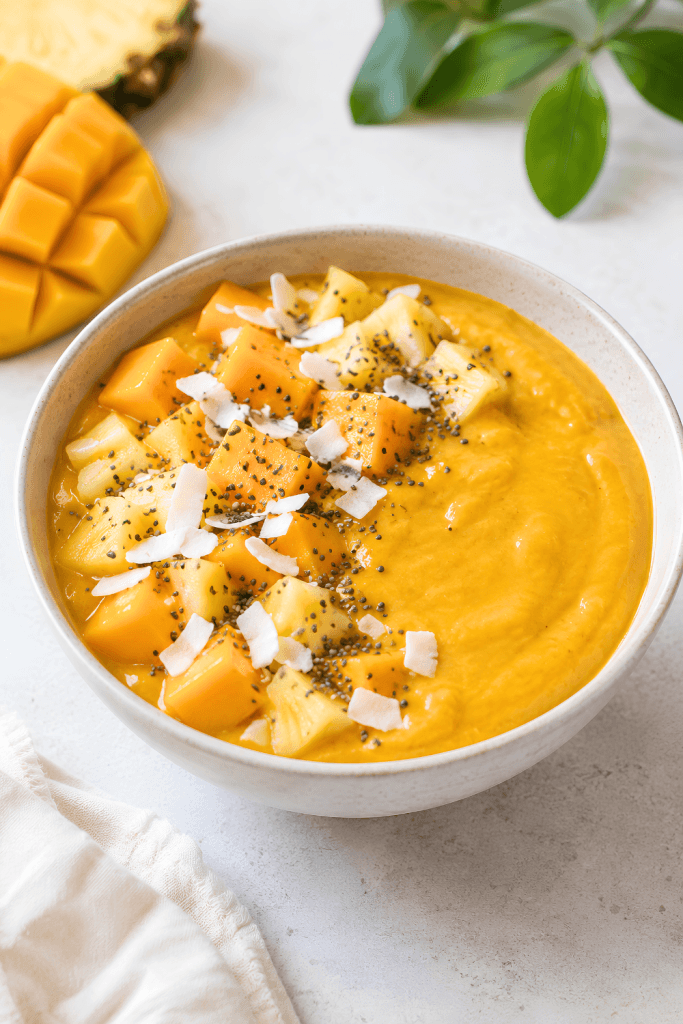
Base:
- 1 cup frozen mango
- 1 frozen banana
- ½ teaspoon ground turmeric
- tiny pinch of black pepper
- small splash of coconut milk
Optional protein: Greek yogurt or vanilla protein powder
Toppings: mango, pineapple, chia seeds, and coconut flakes
Turmeric contains a plant compound called curcumin.
Curcumin is not absorbed very well on its own.
A well-known human study of curcumin and piperine found that piperine, a compound in black pepper, greatly increased curcumin absorption.
You only need a tiny pinch of pepper in a food recipe.
This is a cooking tip, not a medical dose of turmeric.
Beginner tip: Too much turmeric can overpower the fruit. Start small.
12. High-Protein Smoothie Bowl for Women
Best for: a filling breakfast with protein, fiber, and healthy fats
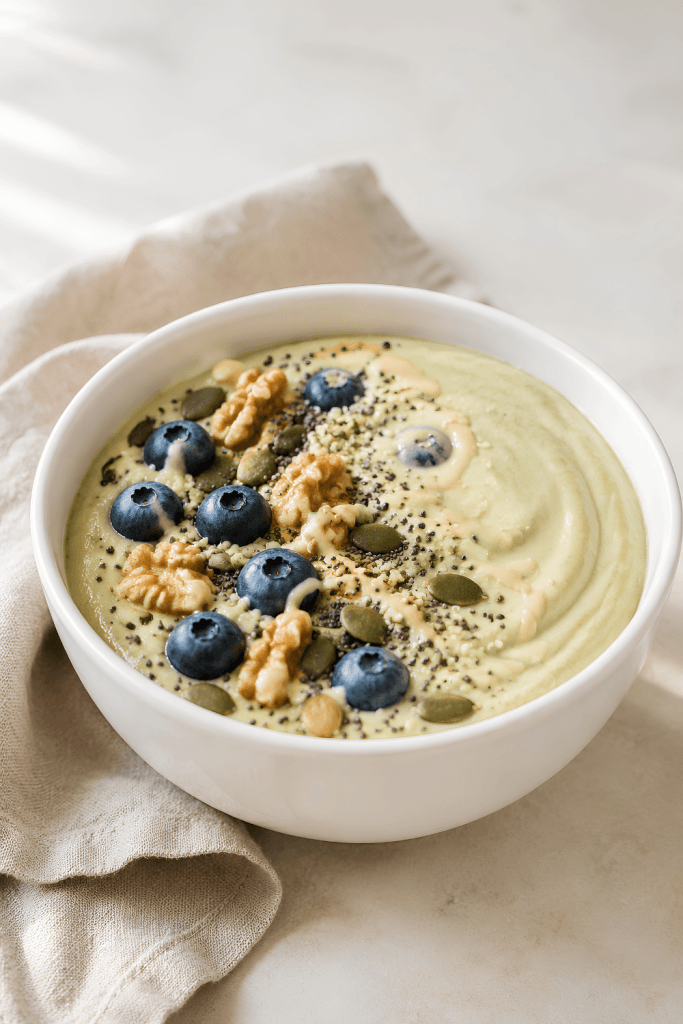
Base:
- 1 frozen banana
- ¾ cup frozen mango
- 1 tablespoon ground flaxseed
- 1 tablespoon hemp seeds
- small splash of oat milk
Optional protein: ½ cup Greek yogurt or vanilla protein powder
Toppings: pumpkin seeds, walnuts, blueberries, chia seeds, and a small tahini drizzle
Ground flaxseed contains plant compounds called lignans.
Researchers have studied whether flaxseed may influence estrogen metabolism.
That means flaxseed should not be treated like hormone therapy.
It is simply a nutritious source of fiber and plant compounds.
Walnuts and hemp seeds also provide healthy unsaturated fats.
For more midlife nutrition ideas, see natural ways to manage menopause symptoms.
Beginner tip: Ground flaxseed blends better than whole flaxseed.
Make-Ahead Smoothie Bowl Tips for Busy Mornings
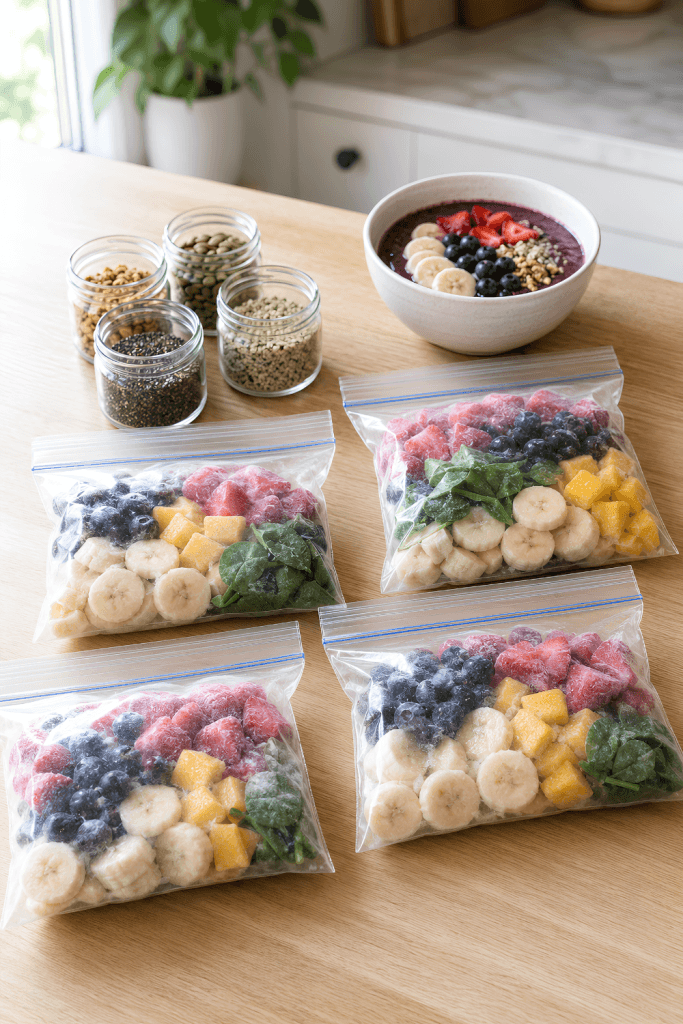
You can make smoothie bowls much faster by preparing the ingredients in advance.
Make Freezer Bags
Place frozen fruit for each recipe into separate freezer bags.
Label the bag with the recipe name.
You can also add spinach or other freezer-friendly ingredients.
Keep Toppings Ready
Store granola, chia seeds, pumpkin seeds, and coconut flakes in small containers.
Then you only need to grab and sprinkle.
Keep Protein Easy
Keep Greek yogurt in the refrigerator.
You can also measure protein powder ahead of time.
Do Not Fully Blend Bowls Too Early
A finished smoothie bowl melts and separates in the refrigerator.
For the best texture, freeze the ingredients and blend them just before eating.
Smoothie Bowl Nutrition at a Glance
You do not need every nutrient in every bowl.
Use this as a simple guide.
| Nutrition Goal | Easy Smoothie Bowl Ingredients |
|---|---|
| Protein | Greek yogurt, hemp seeds, nut butter, protein powder |
| Iron | Spinach, pumpkin seeds, hemp seeds |
| Magnesium | Pumpkin seeds, banana, cacao, almonds, peanut butter |
| Healthy fats | Nut butter, walnuts, avocado, tahini, chia |
| Fiber | Berries, chia seeds, flaxseed, pumpkin, granola |
If you use plant sources of iron, pair them with vitamin C-rich fruits such as kiwis, mangoes, or berries.
And if low energy persists even when you are eating regularly, our guide on why you might always feel tired can help you consider other possible causes.
Frequently Asked Questions About Smoothie Bowls
What Makes a Smoothie Bowl Thick?
Frozen fruit and very little liquid are the key.
Frozen banana works especially well.
Add milk about one tablespoon at a time until the blender starts moving.
What Should I Put in a Beginner Smoothie Bowl?
Start with:
- frozen banana
- one other frozen fruit
- a small amount of milk
- Greek yogurt or nut butter
- two or three toppings
You can make the recipe more complex later.
Can You Make Smoothie Bowls Ahead of Time?
Prepare the ingredients ahead, but blend them when you are ready to eat.
Fully blended bowls tend to melt and separate.
Are Smoothie Bowls Healthy?
They can be.
Fruit, yogurt, seeds, nuts, and whole-grain toppings can provide protein, fiber, vitamins, minerals, and healthy fats.
Watch how much sweetened granola, honey, syrup, or sweetened açaí you add.
A smoothie bowl does not need to taste like dessert to be enjoyable.
What Is the Difference Between a Smoothie and a Smoothie Bowl?
A smoothie is thinner and designed to drink.
A smoothie bowl uses less liquid.
It should be thick enough to eat with a spoon.
Toppings also add texture.
What Are the Best Smoothie Bowl Toppings?
Good beginner choices include:
- berries
- sliced banana
- kiwi
- granola
- chia seeds
- pumpkin seeds
- hemp seeds
- coconut flakes
- nuts
- nut butter
Choose a few rather than piling everything into one bowl.
The Bottom Line
Smoothie bowls do not need to be fancy.
Frozen fruit, a protein source, a small amount of liquid, and a few toppings are enough.
Start with one or two recipes you like.
Then change the fruit, protein, or toppings based on what you already have at home.
A good breakfast does not need perfect presentation.
It needs to be practical enough that you will actually make it.
Medical Disclaimer
This article is for educational purposes only.
It is not personalized medical or nutrition advice.
Talk with a qualified healthcare professional about your individual nutrition needs, especially if you are pregnant, managing a medical condition, have food allergies, or take medicines that affect your diet.
About the Author
Lauretta Iyamu, PharmD, is a Women’s Health Medical Writer and Clinical Researcher.
She helps women understand medicines, menopause, sleep, fertility, and other health topics in clear, simple language.
Her goal is to turn health research into useful information you can understand and use when talking with your healthcare team.
References
Healthy Avid uses trusted medical organizations and peer-reviewed studies to support the information shared in our articles. Learn more about our editorial process.
- Laurindo, L. F., Barbalho, S. M., Araújo, A. C., Guiguer, E. L., Mondal, A., Bueno, P. C. S., Uesugi, T. M., de Souza, M. S. S., Guiguer, L., & Flato, U. A. P. (2023). Açaí (Euterpe oleracea Mart.) in health and disease: A critical review. Nutrients, 15(4), 989.
- Tran, P. H. L., & Tran, T. T. D. (2021). Blueberry supplementation in neuronal health and protective mechanisms against neurodegeneration. Nutrients, 13(1), 151.
- Shoba, G., Joy, D., Joseph, T., Majeed, M., Rajendran, R., & Srinivas, P. S. S. R. (1998). Influence of piperine on the pharmacokinetics of curcumin in animals and human volunteers. Planta Medica, 64(4), 353–356.
- Losso, J. N., Finley, J. W., Karki, N., Liu, A. G., Prudente, A., Tipton, R., Yu, Y., & Greenway, F. L. (2018). Pilot study of the tart cherry juice for the treatment of insomnia and investigation of mechanisms. American Journal of Therapeutics, 25(2), e194–e201.
- Howatson, G., Bell, P. G., Tallent, J., Middleton, B., McHugh, M. P., & Ellis, J. (2012). Effect of tart cherry juice (Prunus cerasus) on melatonin levels and enhanced sleep quality. European Journal of Nutrition, 51(8), 909–916.
- Hutchins, A. M., Martini, M. C., Olson, B. A., Thomas, W., & Slavin, J. L. (2001). Flaxseed consumption influences endogenous hormone concentrations in postmenopausal women. Nutrition and Cancer, 39(1), 58–65.
- Musazadeh, V., et al. (2023). The effect of flaxseed supplementation on sex hormone profile in adults: A systematic review and meta-analysis. Frontiers in Nutrition, 10.
- National Institutes of Health, Office of Dietary Supplements. (n.d.). Iron: Fact sheet for health professionals.
- National Institutes of Health, Office of Dietary Supplements. (n.d.). Zinc: Fact sheet for health professionals.
- National Institutes of Health, Office of Dietary Supplements. (n.d.). Magnesium: Fact sheet for health professionals.
- Lynch, S. R., & Cook, J. D. (1980). Interaction of vitamin C and iron. Annals of the New York Academy of Sciences, 355, 32–44.
- Madadi, E., Mazloum-Ravasan, S., Yu, J. S., Ha, J. W., Hamishehkar, H., & Kim, K. H. (2022). Therapeutic application of betalains: A review. Food Chemistry: X, 13, 100235.
- Farinon, B., Molinari, R., Costantini, L., & Merendino, N. (2020). The seed of industrial hemp (Cannabis sativa L.): Nutritional quality and potential functionality for human health and nutrition. Nutrients, 12(7), 1935.