Do you feel tired even after a full night of sleep?
Maybe you also feel cold, weak, or foggy.
Low iron could be one possible reason.
Iron helps your blood carry oxygen around your body.
When iron runs low, your muscles and brain may not get the oxygen they need.
That can leave you feeling worn out.
Eating more iron-rich foods may help support healthy iron levels.
But food is not always enough if your iron is already very low.
Testing can help you know what is really going on.
Why Iron Is Important for Women
Iron helps your body make hemoglobin.
Hemoglobin is a protein in red blood cells.
It carries oxygen from your lungs to the rest of your body.
Women often need more iron because of:
- monthly periods
- pregnancy
- heavy bleeding
- plant-based diets
- low food intake
Women ages 19 to 50 need about 18 milligrams of iron each day.
Pregnant women need more.
After menopause, the daily need usually drops.
You can have low iron stores before you develop anemia.
This means you may feel tired even when a basic blood count still looks normal.
Signs of Low Iron in Women
Low iron can cause more than tiredness.
You may also notice:
- brain fog
- headaches
- cold hands and feet
- pale skin
- shortness of breath
- hair shedding
- brittle nails
- restless legs
- a racing heartbeat
These symptoms can have many causes.
They do not prove that your iron is low.
Heme Iron vs. Non-Heme Iron
There are two main kinds of iron in food.
Heme Iron Foods
Heme iron comes from animal foods such as:
- meat
- poultry
- fish
- shellfish
Your body can absorb this kind more easily.
Non-Heme Iron Foods
Non-heme iron comes from:
- beans
- lentils
- tofu
- vegetables
- seeds
- fortified foods
Your body does not absorb as much of this type.
But you can help by eating it with vitamin C.
Good vitamin C foods include:
- oranges
- strawberries
- bell peppers
- tomatoes
- broccoli
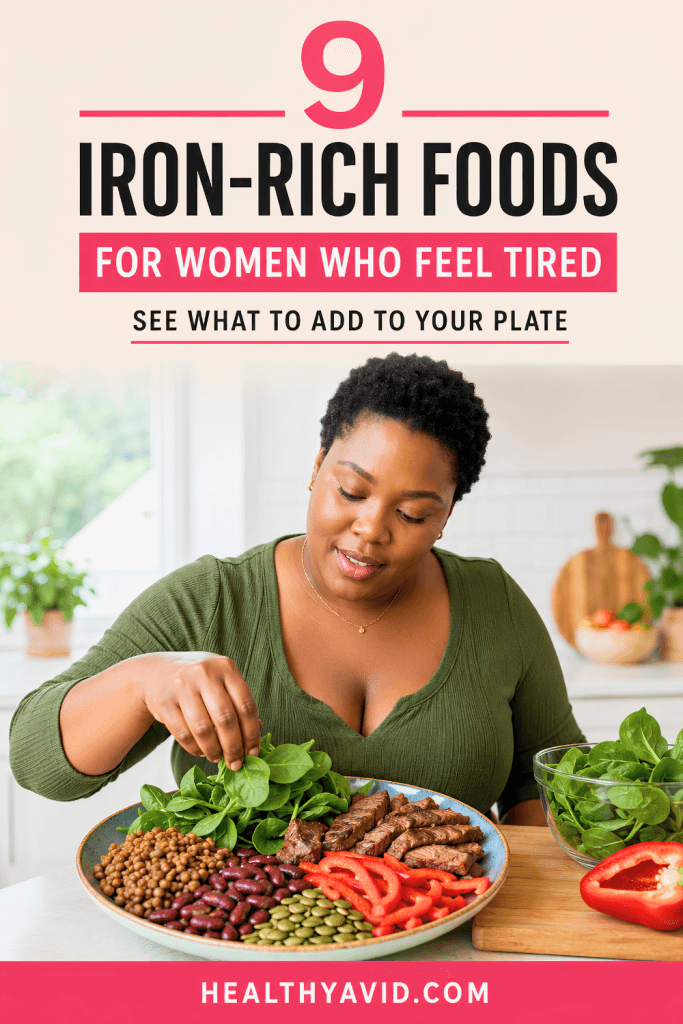
9 Best Iron-Rich Foods for Women
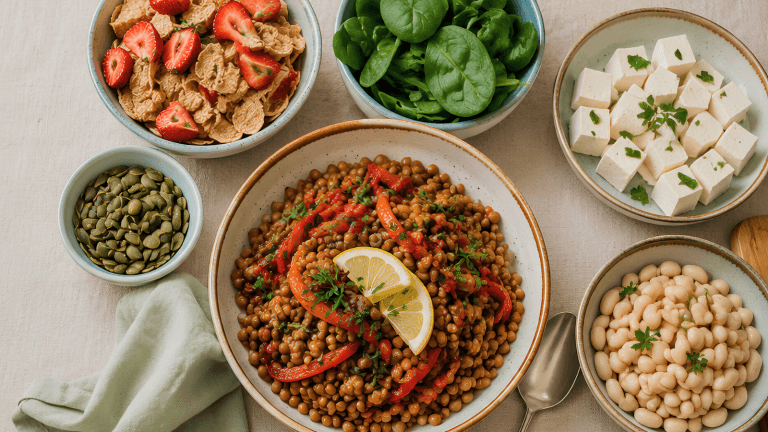
1. Fortified Breakfast Cereal
Some fortified cereals provide about 18 milligrams of iron per serving.
That can meet a large part of your daily need.
The amount varies by brand, so check the food label.
Pair cereal with strawberries or orange slices for vitamin C.
2. Oysters and Mussels
Shellfish are some of the best natural sources of iron.
Cooked oysters provide about 8 milligrams per 3-ounce serving.
Cooked mussels provide about 6 milligrams per 3 ounces.
This is mostly heme iron, which your body absorbs well.
3. Beef Liver
Beef liver provides about 5 milligrams of iron per 3 ounces.
It is also rich in other nutrients.
Because liver is very high in vitamin A, it should be eaten only sometimes.
Pregnant women should ask a healthcare professional about safe choices.
4. Beans and Lentils
Beans and lentils are helpful plant sources of iron.
Examples include:
- white beans: about 8 milligrams per cup
- lentils: about 3 milligrams per half cup
- chickpeas: about 2 milligrams per half cup
Add tomatoes, peppers, or lemon to help your body absorb more iron.
5. Tofu and Tempeh
Firm tofu provides about 3 milligrams of iron per half cup.
Tempeh also provides iron and plant protein.
These foods work well in stir-fries, grain bowls, and salads.
Pair them with broccoli, tomatoes, or bell peppers for vitamin C.
6. Cooked Spinach and Swiss Chard
Cooked spinach provides about 3 milligrams of iron per half cup.
Swiss chard also contains iron.
This is non-heme iron, so your body may not absorb all of it.
Add lemon juice, tomatoes, or peppers to help.
7. Lean Beef
A 3-ounce serving of lean beef provides about 2 milligrams of iron.
The amount may seem small, but it is heme iron.
Your body absorbs this type more easily than plant iron.
You do not need a large steak.
A small serving with beans or vegetables can still help.
8. Pumpkin Seeds and Hemp Seeds
Pumpkin seeds provide about 2 to 2.5 milligrams of iron per ounce.
Hemp seeds provide a similar amount in a small serving.
Sprinkle them on:
- oatmeal
- salads
- soups
- yogurt
- grain bowls
They are an easy way to add a little more iron.
9. Dark Chocolate
Dark chocolate with at least 70% cacao provides about 3 milligrams of iron per ounce.
It can add some iron, but it should be seen as a small bonus.
It is not the best main source.
Choose a small serving and pair it with fruit.
How to Absorb More Iron From Food
Eating iron-rich food is only part of the story.
Your body also needs to absorb it.
Pair Plant Iron With Vitamin C
Vitamin C helps your body absorb non-heme iron.
Simple pairings include:
- lentils with tomatoes
- beans with bell peppers
- tofu with broccoli
- spinach with lemon
- cereal with strawberries
Keep Tea and Coffee Away From Iron-Rich Meals
Tea and coffee contain compounds that can lower iron absorption.
Try having them at a different time from your main iron-rich meal.
Large amounts of calcium may also lower absorption when eaten at the same time.
Mix Animal and Plant Iron
Eating meat or seafood with beans, grains, or vegetables may help your body absorb more plant iron.
For example:
- beef with beans
- chicken with lentils
- mussels with tomato sauce
You do not need a perfect diet.
Small, steady changes matter more than one special meal.
When Iron-Rich Foods May Not Be Enough
Food can support healthy iron levels.
But it may not fix a true iron deficiency on its own.
You may need testing if you have:
- heavy periods
- ongoing tiredness
- shortness of breath
- hair shedding
- restless legs
- a plant-only diet
- pregnancy
- a health problem that affects absorption
Your doctor may check your hemoglobin and ferritin levels.
Do not start an iron supplement just because you feel tired.
Too much iron can cause harm.
Iron supplements can also cause nausea, stomach pain, and constipation.
Testing first helps you know whether iron is really the problem.
Pharmacist’s Note
Tiredness has many causes.
Low iron is one possibility, but sleep problems, thyroid disease, stress, and other health conditions can feel similar.
Ask about testing before taking iron.
A Helpful Next Step
If low energy is your main concern, read Why Am I Always Tired? Common Causes and What Your Body Is Telling You.
You can also explore The Complete Guide to Sleep and Women’s Health if poor sleep may be adding to your fatigue.
The Bottom Line
Iron-rich foods can support your energy and help your blood carry oxygen.
Good choices include shellfish, beans, lentils, tofu, leafy greens, lean beef, seeds, fortified cereal, and dark chocolate.
Pair plant iron with vitamin C.
And if tiredness continues, ask about ferritin and hemoglobin testing before starting a supplement.
Medical Disclaimer
This article is for education only.
It is not medical advice, diagnosis, or treatment.
Talk with a qualified healthcare professional before starting iron supplements, especially during pregnancy or if you have a medical condition.
About the Author
Lauretta Iyamu, PharmD, is a Women’s Health Medical Writer and Clinical Researcher.
She helps women understand medicines, menopause, sleep, hormones, and other health topics in clear, simple language.
Her goal is to turn health research into useful information you can understand and use when talking with your healthcare team.
References
Healthy Avid uses trusted medical organizations and peer-reviewed studies to support the information shared in our articles. Learn more about our editorial process.
- National Institutes of Health, Office of Dietary Supplements. Iron: Consumer Fact Sheet. https://ods.od.nih.gov/factsheets/Iron-Consumer/
- National Institutes of Health, Office of Dietary Supplements. Iron: Health Professional Fact Sheet. https://ods.od.nih.gov/factsheets/Iron-HealthProfessional/
- World Health Organization. Anaemia. https://www.who.int/news-room/fact-sheets/detail/anaemia
- NHS. Iron deficiency anaemia. https://www.nhs.uk/conditions/iron-deficiency-anaemia/
- USDA National Nutrient Database. Iron Content of Selected Foods. https://ods.od.nih.gov/pubs/usdandb/Iron-Content.pdf