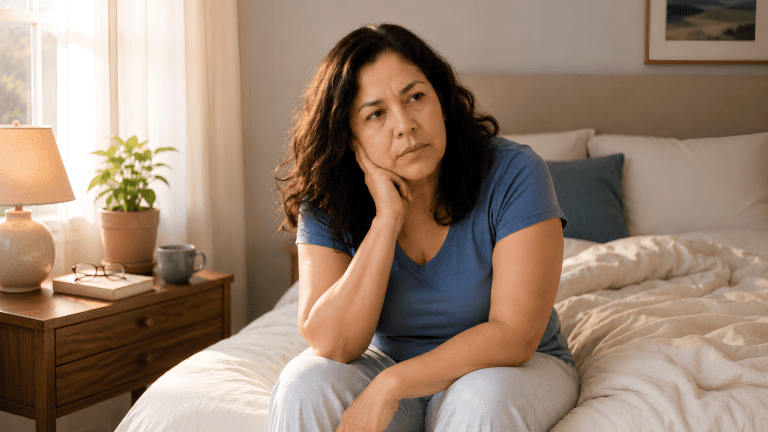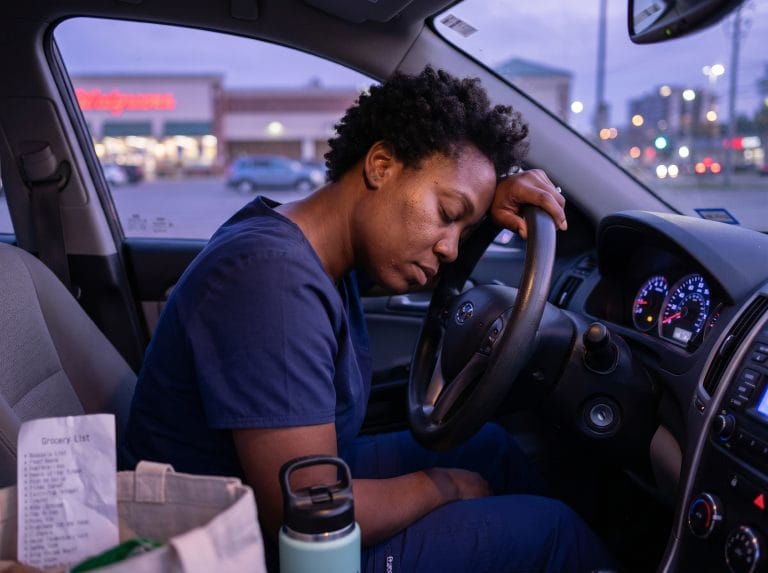
You go to bed tired.
But your brain will not slow down.
You toss. Turn. Check the clock. Then the next day feels even harder.
You may feel:
- More emotional
- More hungry
- More anxious
- More foggy
- More drained
That is not only because you are tired.
Poor sleep can change your hormones.
And hormone changes can make sleep worse too.
That is why many women struggle with sleep during:
- PMS
- Pregnancy
- Postpartum recovery
- PMOS
- Perimenopause
- Menopause
Sleep and hormones work together every day.
When one gets thrown off, the other often does too.
Table of Contents
ToggleQuick Answer: How Are Sleep and Hormones Connected?
Sleep helps the body control important hormones.
Good sleep supports:
- Stress levels
- Blood sugar
- Appetite
- Mood
- Energy
- Reproductive hormones
Poor sleep can disrupt these systems.
At the same time, hormone changes can make sleep harder.
This can create a frustrating cycle:
- Hormones affect sleep
- Poor sleep affects hormones
- Symptoms feel worse over time
This is why better sleep can support women’s health in many different ways.
Why Women’s Sleep Changes So Often
Women’s hormones change many times across life.
Hormone levels shift during:
- The menstrual cycle
- Pregnancy
- Breastfeeding
- Perimenopause
- Menopause
Research published in Frontiers in Neuroscience explains that female hormones can affect sleep quality and brain activity.
That means sleep problems are not always random.
Many women notice:
- Trouble falling asleep
- Waking up during the night
- Feeling hot while sleeping
- Light sleep
- Feeling tired after a full night in bed
Hormones are often part of the reason.
Cortisol: The Stress Hormone
Cortisol is your main stress hormone.
It follows a daily pattern.
Normally:
- Cortisol rises in the morning to help you wake up
- Cortisol lowers at night so your body can rest
But poor sleep can disturb this rhythm.
When cortisol stays too high at night, you may feel:
- Restless
- Anxious
- Wired but tired
- Unable to relax
High cortisol over time may also affect:
- Blood sugar
- Mood
- Energy
- Belly fat storage
This is one reason stress and sleep problems often show up together.
Estrogen and Progesterone Affect Sleep
Estrogen and progesterone are two major female hormones.
They both affect the brain and nervous system.
Progesterone has a calming effect on the body.
When progesterone drops, sleep can get worse.
This often happens:
- Before a period
- During perimenopause
- After childbirth
You may notice:
- Trouble falling asleep
- More anxiety at night
- Waking up often
- Feeling less rested
Estrogen also plays a role in sleep.
Low estrogen can trigger:
- Night sweats
- Hot flashes
- Insomnia
- Lighter sleep
This is very common during perimenopause and menopause.
Poor Sleep Affects Hunger Hormones Too
Have you ever noticed you crave more sugar after a bad night of sleep?
That is not weakness.
It is biology.
Sleep affects two hunger hormones:
- Ghrelin tells your body you are hungry
- Leptin tells your body you are full
When sleep is poor, ghrelin can rise and leptin can drop.
That may lead to:
- More cravings
- More snacking
- Stronger hunger
- Less fullness after meals
This is one reason poor sleep can make healthy eating feel much harder.
Sleep and Blood Sugar Are Connected
Sleep also affects insulin.
Insulin helps move sugar from your blood into your cells for energy.
When sleep is poor, your body may have a harder time using insulin well.
Over time, this may raise the risk of:
- Energy crashes
- Insulin resistance
- Weight gain
- Strong carb cravings
Women with PMOS or perimenopause symptoms may notice this even more.
Why Sleep Gets Harder During Perimenopause
Many women suddenly struggle with sleep in their 40s.
This often happens because estrogen and progesterone start changing more unpredictably.
Lower estrogen can trigger:
- Hot flashes
- Night sweats
- Anxiety
- Lighter sleep
- Waking often
Research published in Journal of Clinical Medicine explains that sleep problems are very common during perimenopause.
Some women feel exhausted all day but still cannot sleep well at night.
That experience is common, and it deserves attention.
What Actually Helps Improve Sleep and Hormonal Balance?
You do not need a perfect nighttime routine.
Small habits can genuinely help your body sleep better and feel more balanced over time.
Get Morning Sunlight
Morning sunlight helps reset your internal body clock.
Try stepping outside within 30 minutes of waking up.
Even 10 minutes helps.
Morning light supports:
- Cortisol rhythm
- Melatonin production later at night
- Energy during the day
- Better sleep timing
Keep a Consistent Sleep Schedule
Your body likes rhythm.
Going to sleep and waking up around the same time daily may help regulate hormones connected to stress and sleep.
Even weekends matter.
Eat Enough During the Day
Under-eating can stress the body.
For some women, skipping meals may worsen:
- Cortisol
- Sleep quality
- Night waking
- Hormonal symptoms
Balanced meals with:
- Protein
- Fiber
- Healthy fats
often support steadier energy and calmer sleep.
Reduce Screen Time Before Bed
Phones and bright screens can keep the brain alert.
Blue light may reduce melatonin, the hormone that helps you feel sleepy.
Try replacing scrolling with:
- Reading
- Stretching
- Calm music
- Journaling
- Deep breathing
Even small changes help the nervous system relax.
Keep Your Bedroom Cool
A cooler room often helps the body sleep better.
This can be especially helpful for women dealing with:
- Night sweats
- Hot flashes
- Restless sleep
Many sleep experts recommend a cool, dark, quiet room for better sleep quality.
Watch Late-Day Caffeine
Coffee late in the day can affect sleep more than many people realize.
Some women are especially sensitive to caffeine during:
- PMS
- Perimenopause
- High stress periods
Try reducing caffeine later in the afternoon if sleep feels difficult.
Final Thoughts
Sleep affects almost every part of women’s health.
It affects:
- Hormones
- Mood
- Hunger
- Energy
- Stress
- Blood sugar
- Mental clarity
And hormones affect sleep too.
That is why poor sleep can sometimes feel like everything is harder at once.
The good news is that small sleep habits can create real changes over time.
You do not need a perfect routine.
Even small improvements in sleep may help you feel calmer, clearer, and more balanced.
Healthy Avid shares educational wellness content designed to help women better understand their bodies and health. This article is for informational purposes only and should not replace medical advice from your healthcare provider.
Written by Lauretta Iyamu, PharmD. She is a medical writer and clinical researcher focused on women’s health, brain health, and evidence-based wellness communication.
Sources
Healthy Avid uses trusted medical organizations and peer-reviewed studies to support the information shared in our articles. Learn more about our editorial process.
- Frontiers in Neuroscience review on women’s sleep and hormones — Research explaining how female hormones affect sleep and brain activity.
- Harvard Health on sleep and appetite hormones — Overview discussing how poor sleep affects hunger and cravings.
- Journal of Clinical Medicine perimenopause sleep review — Research examining sleep problems during perimenopause.
- National Institute on Aging menopause and sleep guide — Government guide explaining menopause-related sleep changes.
- Sleep Foundation sleep and hormones overview — Educational overview on how hormones and sleep affect each other.