Yes, menopause can be linked with joint pain.
As estrogen levels fall, you may notice new aches, stiffness, or sore joints.
Research shows joint pain is very common around menopause.
Maybe your hands feel stiff when you wake up.
Your knees may hurt on the stairs.
Your hips or shoulders may start aching for no clear reason.
It is easy to think, “I must just be getting older.”
But age may not be the whole story.
Hormone changes during perimenopause and menopause can affect your muscles, bones, joints, and other tissues.
Here’s the good news? Menopause joint pain does not always mean your joints are being damaged.
There are also practical ways to help manage it.
Yes, Menopause Can Be Linked With Joint Pain
Doctors sometimes use the word arthralgia for joint pain without clear joint damage.
A review published in Maturitas reported that more than half of women experience arthralgia around menopause.
A newer review of muscle and joint health during menopause found that these problems are also very common during the menopause transition.
Pain may begin during perimenopause. This is the stage before menopause when hormone levels start changing.
You may also notice:
- Hot flashes
- Night sweats
- Poor sleep
- Mood changes
- Tiredness
- Changes in your periods
When several of these changes happen together, menopause may be part of the picture.
Still, not every new ache is caused by hormones.
Osteoarthritis, injuries, thyroid problems, low vitamin D, and inflammatory arthritis can cause similar symptoms.
Estrogen for Your Joints
Estrogen does much more than control periods.
It also affects your bones, muscles, tendons, cartilage, and joints.
Cartilage is the smooth tissue that cushions the ends of your bones. It helps your joints move smoothly.
Estrogen also plays a role in controlling inflammation.
According to Mass General Brigham, lower estrogen during menopause may increase inflammation and add to muscle and joint pain.
Estrogen receptors are found in many tissues that help you move.
When estrogen falls, you may notice:
- More stiffness
- More aches
- Changes in muscle strength
- Greater pain sensitivity
Researchers are still learning exactly how these changes work.
There is no single blood test or scan that can prove your joint pain is from menopause.
What Does Menopause Joint Pain Feel Like?
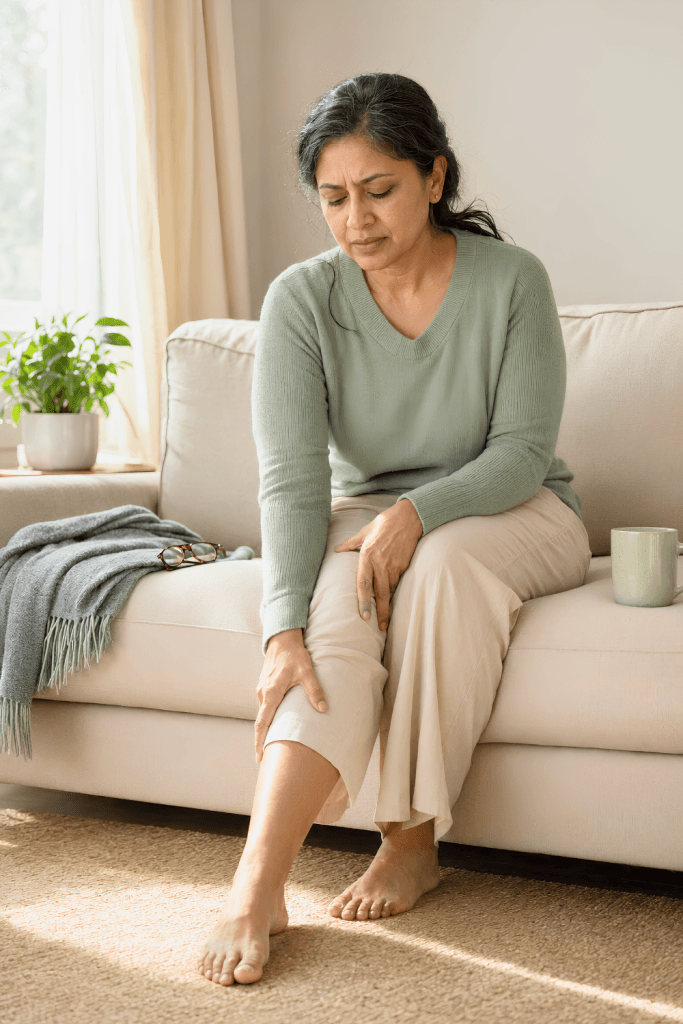
Menopause joint pain can feel different for each woman.
Many women notice discomfort in more than one joint.
You may wake up stiff and need a little time to loosen up.
The pain may feel like:
- A dull ache
- Morning stiffness
- Soreness after sitting
- Tightness when you first move
- Pain on stairs
- General muscle and joint aches
Common areas include your knees, hips, hands, wrists, shoulders, and lower back.
Menopause-related pain often happens without major redness or swelling.
A hot, very swollen, or severely painful joint may point to another condition.
Morning stiffness also gives useful clues.
Mild stiffness that improves once you move can happen during menopause or with osteoarthritis.
But stiffness lasting more than an hour, especially with warm or swollen joints, should be checked by a healthcare professional.
Menopause Joint Pain vs Osteoarthritis vs Rheumatoid Arthritis
These conditions can feel similar.
But they are not the same.
| Feature | Menopause Joint Pain | Osteoarthritis | Rheumatoid Arthritis |
| Pattern | Several joints may ache | Often knees, hips, hands | Often hands and wrists |
| Swelling | Usually little or none | Some swelling can occur | Swelling is common |
| Warm joints | Usually no | Not usually | Can feel warm |
| Morning stiffness | Often short | Usually shorter | Often over 1 hour |
| Joint damage | Usually not destructive | Can damage cartilage | Can damage joints if untreated |
| Other clues | Hot flashes, poor sleep | Pain often worse with use | Fatigue and other symptoms |
Osteoarthritis, or OA, happens when tissues in a joint slowly break down.
OA becomes more common as you get older. It is also more common and often more severe in women after age 50.
Rheumatoid arthritis, or RA, is an autoimmune disease.
This means your immune system attacks healthy joint tissue by mistake.
RA can cause warm, swollen, painful joints and long-lasting morning stiffness.
Menopause does not automatically mean RA or OA.
But these conditions can appear during the same years. That is why ongoing joint symptoms deserve attention.
Simple Ways to Ease Menopause Joint Pain
There is no single fix that works for everyone.
But several simple steps may help.
Keep moving
Movement often helps stiff joints.
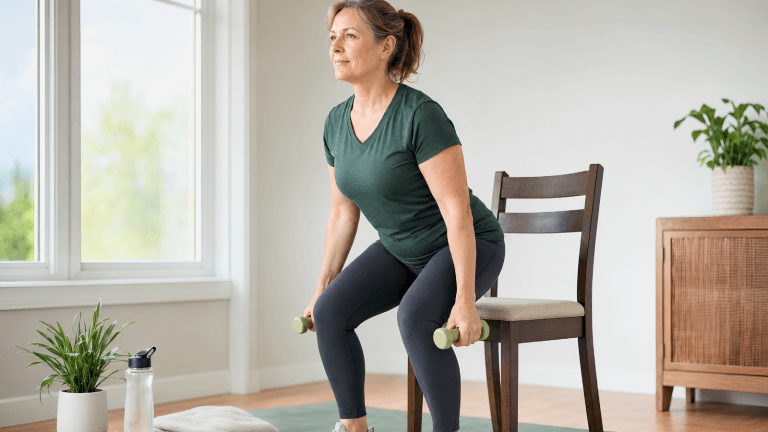
Good low-impact choices include:
- Walking
- Swimming
- Cycling
- Yoga
- Pilates
Strength training is also important.
It builds the muscles around your joints. Stronger muscles can give your knees, hips, shoulders, and back more support.
You do not need heavy weights to begin.
Light resistance or body-weight exercises can be enough when you are starting.
A physical therapist can also help if pain makes exercise difficult.
Eat foods that support your body
A balanced eating pattern can support your muscles, bones, and joints.
A Mediterranean-style diet includes foods such as:
- Vegetables
- Fruit
- Whole grains
- Beans
- Fish
- Olive oil
- Nuts and seeds
Fatty fish like salmon and sardines contain omega-3 fats.
Try to focus on food before supplements unless your healthcare professional recommends otherwise.
Make sleep a priority
Poor sleep can make pain feel worse.
Pain can also make it harder to sleep.
That creates an unpleasant cycle.
Treating night sweats and other menopause symptoms may help you sleep more comfortably.
Heat, Cold, and Short-Term Pain Relief
Heat may help loosen stiff muscles and joints.
You could try a warm shower or heating pad.
Cold packs may feel better after activity if an area is sore.
Some people also use medicines such as acetaminophen or anti-inflammatory medicines like ibuprofen.
These medicines are not safe for everyone.
Ask a doctor or pharmacist before using them often, especially if you have kidney, stomach, heart, or blood pressure problems.
Low vitamin D can also contribute to aches in some people.
Your healthcare professional can decide whether testing is needed.
Can HRT Help Joint Pain During Menopause?
It may help some women a little.
HRT means hormone replacement therapy. It is also called menopausal hormone therapy.
HRT is mainly used for menopause symptoms such as hot flashes and night sweats.
Some research suggests women using hormone therapy may also notice less joint pain.
However, the improvement appears to be modest.
HRT is not normally started only to treat joint pain.
If you also have bothersome menopause symptoms, you can talk with your healthcare professional about whether HRT may be suitable for you.
The choice depends on your health history, age, symptoms, and personal risks.
When to See a Doctor
Joint pain during menopause is common.
But some warning signs need medical attention.
Talk with a healthcare professional if you have:
- A hot, red, or swollen joint
- Morning stiffness lasting more than one hour
- Sudden severe pain in one joint
- Joint pain with fever or a rash
- Severe or unusual tiredness
- Pain that makes walking or using your hands difficult
- Symptoms that keep getting worse
Other health problems can cause these symptoms.
These include rheumatoid arthritis, gout, lupus, psoriatic arthritis, thyroid problems, vitamin D deficiency, and osteoarthritis.
A 2026 review of joint pain in midlife women highlights why doctors need to consider other causes instead of assuming every new joint problem comes from menopause.
Frequently Asked Questions
Does menopause cause joint pain and stiffness?
Yes, menopause can be linked with joint pain and stiffness.
Research shows these symptoms become more common during the menopause transition. Falling estrogen may be one reason.
Which joints hurt most during menopause?
Common areas include your:
- Knees
- Hips
- Hands
- Wrists
- Shoulders
- Lower back
You may notice pain in several areas at once.
How long does menopause joint pain last?
There is no set timeline.
Some women improve as hormone changes settle. Others may have joint problems for longer, especially if osteoarthritis or another condition is also present.
Does HRT help menopause joint pain?
It may give some women modest relief.
However, HRT is not normally prescribed for joint pain alone.
What can help menopause joint pain?
Helpful steps may include regular movement, strength training, good sleep, a balanced diet, and short-term pain relief when it is safe for you.
Helpful Next Step
Joint pain is only one part of menopause.
You may also be wondering how long hot flashes, sleep changes, mood changes, and other symptoms can continue.
Read next: How Long Do Menopause Symptoms Last? A Simple Guide for Women.
Hormones can also affect digestion. If bloating has become part of your experience, read Menopause Bloating and Gas: 11 Causes and What May Help.
The Bottom Line
So, can menopause cause joint pain?
Yes, menopause can be linked with new or worse joint aches.
Falling estrogen may affect inflammation, muscles, cartilage, and how your body feels pain.
For many women, this means stiff or aching joints during midlife.
But you should not assume every joint problem is caused by menopause.
Swollen, hot, very painful joints or long-lasting morning stiffness need a closer look.
Regular movement, strength work, sleep, and healthy food can help support your joints.
And when something does not feel right, getting checked can help you find the real cause.
Medical Disclaimer
This article is for education only. It is not medical advice, diagnosis, or treatment. Talk with a qualified healthcare professional about your symptoms, medicines, and treatment options.
Author Bio
Written by Lauretta Iyamu, PharmD, Women’s Health Medical Writer and Clinical Researcher.
Lauretta helps women understand sleep and hormone-related symptoms through clear, evidence-based health information.
References
- Magliano M. Menopausal arthralgia: Fact or fiction. Maturitas. 2010;67(1):29–33.
PubMed - Wright VJ, Schwartzman JD, Itinoche R, Wittstein J. The musculoskeletal syndrome of menopause. Climacteric. 2024;27:466–472.
Full article - Manno RL. Joint pain and menopause. Menopause. 2026;33(3):358–360.
PMC full text - Mass General Brigham. Menopause and Joint Pain. Updated March 12, 2026.
Read the article - Arthritis Foundation. Joint Pain During Menopause. Updated September 16, 2024.
Read the article - Arthritis Foundation. Going Through Menopause With Arthritis.
Read the article - The North American Menopause Society. The 2022 Hormone Therapy Position Statement of The North American Menopause Society. Menopause. 2022.
Position statement