Growing a baby is one of the hardest jobs your body will ever do.
During pregnancy, your body is busy every single day.
It is:
- Growing a baby
- Building a placenta
- Making more blood
- Changing hormone levels
- Preparing for birth
Then after birth, your body starts another important job.
It has to recover.
At the same time, many moms are:
- Feeding a newborn
- Sleeping less
- Healing from delivery
- Learning a new routine
That is why nutrition is so important.
The food you eat helps support both you and your baby.
It can help with:
- Baby’s growth and development
- Energy levels
- Recovery after birth
- Breastfeeding
- Overall health
The good news?
You do not need a perfect diet.
Small healthy choices can make a big difference over time.
Table of Contents
ToggleWhat Is Maternal Nutrition?
Maternal nutrition means eating foods that support your body during:
- Pregnancy
- Childbirth
- Postpartum recovery
- Breastfeeding
It is not a special diet.
It is simply giving your body the nutrients it needs during each stage.
During pregnancy, your body needs extra nutrients because it is growing a baby.
After birth, your body still needs extra support to heal and recover.
That is why healthy eating remains important long after pregnancy ends.
Why Maternal Nutrition Matters
Everything your baby needs to grow comes from you.
The nutrients you eat help build:
- The brain
- The bones
- The eyes
- The heart
- Other organs
Good nutrition also helps support your health.
Research shows that certain nutrients can help lower the risk of pregnancy complications and support healthy development for babies.
For example:
- Folic acid helps support healthy brain and spinal cord development.
- Iron helps carry oxygen throughout the body.
- Calcium helps build strong bones and teeth.
- Protein helps build cells and tissues.
Think of food as the building blocks your body uses every day.
Key Nutrients During Pregnancy
Not every nutrient gets the same amount of attention.
Some are especially important during pregnancy.
Folate
Folate helps support the development of your baby’s brain and spinal cord.
The Centers for Disease Control and Prevention recommends getting folic acid before pregnancy and during pregnancy because it helps reduce the risk of serious birth defects.
Foods rich in folate include:
- Spinach
- Lentils
- Chickpeas
- Broccoli
- Avocados
Iron
Your body needs more iron during pregnancy because it makes extra blood.
Iron helps carry oxygen to both you and your baby.
Good sources include:
- Lean beef
- Chicken
- Lentils
- Beans
- Fortified cereals
- Spinach
Eating iron-rich foods with vitamin C foods, like oranges or strawberries, can help your body absorb more iron.
Calcium
Calcium helps build your baby’s bones and teeth.
Good calcium sources include:
- Milk
- Yogurt
- Cheese
- Fortified plant milks
- Tofu
- Almonds
Protein
Protein helps build every part of your growing baby.
Protein-rich foods include:
- Eggs
- Greek yogurt
- Chicken
- Fish
- Beans
- Lentils
- Cottage cheese
Getting enough protein can also help keep you feeling full longer.
Omega-3 Fats
Omega-3 fats help support healthy brain and eye development.
Foods rich in omega-3s include:
- Salmon
- Sardines
- Trout
- Chia seeds
- Flaxseeds
Many healthcare providers also recommend DHA during pregnancy because it plays an important role in baby brain development.
Healthy Foods to Eat During Pregnancy
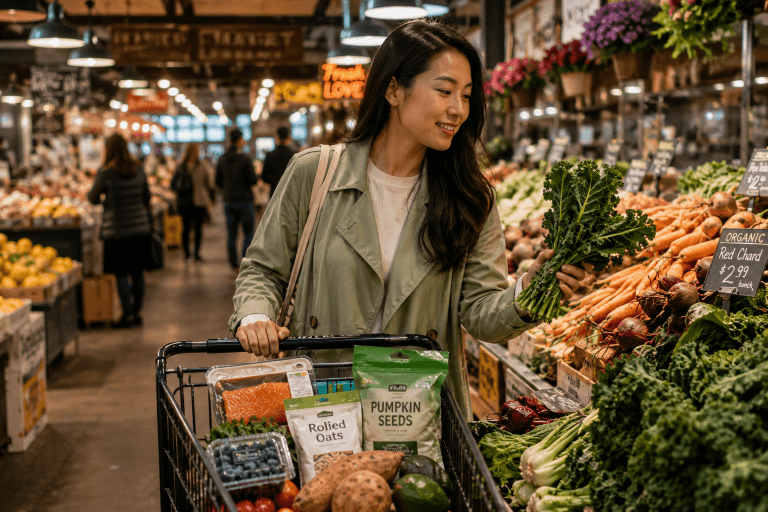
Eating well during pregnancy does not have to be complicated.
You do not need special foods or expensive products.
Most of the time, the goal is to eat a variety of nutritious foods throughout the day.
Fruits and Vegetables
Fruits and vegetables provide vitamins, minerals, fiber, and antioxidants.
Try to eat different colors throughout the week.
Each color provides different nutrients.
Good choices include:
- Berries
- Oranges
- Apples
- Spinach
- Broccoli
- Sweet potatoes
- Bell peppers
- Carrots
The American College of Obstetricians and Gynecologists recommends eating a variety of fruits and vegetables during pregnancy because they provide important nutrients for both mom and baby.
Whole Grains
Whole grains provide energy, fiber, and B vitamins.
They can also help support healthy digestion.
Examples include:
- Oatmeal
- Brown rice
- Quinoa
- Whole wheat bread
- Whole grain pasta
Fiber becomes especially important during pregnancy because constipation is common.
Lean Protein Foods
Protein helps build your baby’s growing body.
Try to include protein with each meal.
Good options include:
- Eggs
- Chicken
- Turkey
- Fish
- Greek yogurt
- Beans
- Lentils
- Tofu
Protein can also help you stay full longer and support steady energy throughout the day.
Healthy Fats
Healthy fats help support your baby’s brain development.
Foods rich in healthy fats include:
- Avocados
- Olive oil
- Nuts
- Seeds
- Salmon
The National Institutes of Health Office of Dietary Supplements explains that omega-3 fats play an important role in baby brain and eye development.
Foods and Drinks to Limit During Pregnancy
Pregnancy is also a time to be careful about certain foods.
Some foods can increase the risk of foodborne illness or expose the baby to harmful substances.
High-Mercury Fish
Some fish contain high levels of mercury.
The FDA recommends avoiding:
- Shark
- Swordfish
- King mackerel
- Tilefish
Instead, choose lower-mercury fish like:
- Salmon
- Sardines
- Trout
Unpasteurized Foods
Unpasteurized dairy products may contain harmful bacteria.
Avoid:
- Unpasteurized milk
- Some soft cheeses made from unpasteurized milk
- Unpasteurized juices
Always check food labels if you are unsure.
Alcohol
The CDC advises avoiding alcohol completely during pregnancy.
No amount of alcohol has been proven safe during pregnancy.
Too Much Caffeine
Most experts recommend limiting caffeine during pregnancy.
The World Health Organization advises keeping caffeine intake below 200–300 mg per day.
That is roughly:
- 1 to 2 small cups of coffee
Talk with your healthcare provider if you are unsure about your caffeine intake.
Building a Healthy Pregnancy Plate
Healthy eating does not require counting every calorie.
A simple meal formula can make planning easier.
Try to include:
- A protein source
- A fruit or vegetable
- A whole grain
- A healthy fat
For example:
Breakfast
- Oatmeal
- Berries
- Walnuts
- Greek yogurt
Lunch
- Grilled chicken
- Brown rice
- Roasted vegetables
- Avocado
Dinner
- Salmon
- Sweet potato
- Broccoli
- Olive oil drizzle
Simple meals are often the easiest meals to stick with.
Staying Hydrated
Water is important during pregnancy.
Your body needs extra fluids to support:
- Increased blood volume
- Amniotic fluid
- Digestion
- Temperature regulation
Many women find it helpful to carry a water bottle throughout the day.
You can also get fluids from:
- Milk
- Herbal tea
- Soups
- Fruits like watermelon and oranges
Even mild dehydration can make fatigue and headaches feel worse.
Postpartum Nutrition: Supporting Recovery After Birth
Many women think nutrition becomes less important after the baby arrives.
The opposite is true.
Your body is still working hard.
After birth, it is busy:
- Healing tissues
- Replacing blood lost during delivery
- Balancing hormones
- Producing breast milk
- Recovering from pregnancy
That takes energy and nutrients.
The postpartum period is sometimes called the fourth trimester because your body is still going through major changes.
Why Nutrition Still Matters After Delivery
Recovery takes time.
Your body needs fuel to heal.
Good nutrition may help support:
- Energy levels
- Tissue healing
- Immune health
- Milk production
- Mood and wellbeing
Many new moms are also dealing with:
- Sleep deprivation
- Stress
- Busy schedules
- Less time to prepare meals
That is why simple, nourishing foods can make a big difference.
Key Nutrients for Postpartum Recovery
Protein
Protein helps repair tissues after birth.
It is especially important if you are recovering from:
- A vaginal delivery
- A cesarean birth
- Tearing or stitches
Protein-rich foods include:
- Eggs
- Chicken
- Greek yogurt
- Fish
- Cottage cheese
- Lentils
- Beans
Try to include protein at every meal when possible.
Iron
Many women lose blood during childbirth.
That can lower iron stores.
Low iron may contribute to:
- Fatigue
- Weakness
- Brain fog
Iron-rich foods include:
- Lean beef
- Lentils
- Beans
- Spinach
- Fortified cereals
Ask your healthcare provider if you think your iron levels may be low.
Fiber
Constipation is common after birth.
Fiber helps support healthy digestion.
Good sources include:
- Oats
- Fruits
- Vegetables
- Beans
- Whole grains
Drinking water along with fiber is important too.
Fluids
Hydration becomes even more important after delivery.
Especially if you are breastfeeding.
A simple tip is to drink a glass of water whenever you feed your baby.
Nutrition While Breastfeeding
Breastfeeding requires a lot of energy.
In fact, many women need more calories while breastfeeding than they did before pregnancy.
Breast milk contains nutrients that come from your body.
That is why continuing to eat balanced meals is so important.
Focus on:
- Protein
- Healthy fats
- Fruits
- Vegetables
- Whole grains
- Plenty of fluids
Many healthcare providers also recommend continuing your prenatal vitamin while breastfeeding.
Talk with your doctor about what is right for you.
Simple Nutrition Tips for Busy Moms
The hardest part of postpartum nutrition is often finding the time.
Simple strategies can help.
Keep Easy Foods Ready
Stock your kitchen with foods that require little preparation:
- Hard-boiled eggs
- Greek yogurt
- Fresh fruit
- Mixed nuts
- Cheese sticks
- Whole grain crackers
These foods are easy to grab when you are busy caring for a baby.
Accept Help
If friends or family ask how they can help, tell them.
A home-cooked meal can be one of the most helpful gifts for a new parent.
Specific requests might include:
- Soup
- Chili
- Lasagna
- Roasted chicken
- Fresh fruit
Most people are happy to help when they know what you need.
Focus on Progress, Not Perfection
Some days will go exactly as planned.
Other days will not.
That is normal.
One less-than-perfect meal does not undo healthy habits.
The goal is consistency, not perfection.
Easy Maternal Nutrition Habits for Everyday Life
Healthy eating during pregnancy and postpartum does not have to be complicated.
A few simple habits can go a long way:
- Eat protein at meals
- Include fruits and vegetables daily
- Drink water throughout the day
- Keep healthy snacks nearby
- Continue taking recommended supplements
- Listen to your hunger cues
Small choices repeated over time can support both you and your baby.
Final Thoughts
Maternal nutrition is not about eating perfectly.
It is about giving your body the support it needs during one of the biggest transitions of your life.
During pregnancy, the food you eat helps support your baby’s growth and development.
After birth, those same healthy habits help support recovery, healing, and breastfeeding.
Start simple.
Focus on balanced meals, plenty of fluids, and nutrient-rich foods.
Small choices each day can help nourish both you and your baby.
Frequently Asked Questions
What is maternal nutrition?
Maternal nutrition refers to the foods and nutrients a woman needs during pregnancy, postpartum recovery, and breastfeeding. Good nutrition helps support both the mother’s health and the baby’s growth and development.
Why is nutrition important during pregnancy?
During pregnancy, your body needs extra nutrients to support your growing baby. Healthy eating helps provide the vitamins, minerals, protein, and healthy fats needed for healthy development.
What are the most important nutrients during pregnancy?
Some of the most important nutrients include:
- Folate
- Iron
- Calcium
- Protein
- Omega-3 fats
- Vitamin D
- Choline
These nutrients help support healthy growth, brain development, bone health, and overall pregnancy health.
How much protein do I need during pregnancy?
Protein needs increase during pregnancy because protein helps build your baby’s organs, muscles, and tissues. Good sources include eggs, fish, chicken, Greek yogurt, beans, lentils, and tofu.
What foods should I avoid during pregnancy?
Some foods may increase the risk of foodborne illness or exposure to harmful substances. These include:
- Raw or undercooked meat
- Raw fish and sushi made with raw seafood
- Unpasteurized milk and cheeses
- High-mercury fish such as shark and swordfish
- Alcohol
Always speak with your healthcare provider if you are unsure about a specific food.
Do I need a prenatal vitamin?
Most healthcare providers recommend a prenatal vitamin before and during pregnancy. Prenatal vitamins help fill nutritional gaps but should be used alongside a healthy diet, not as a replacement for one.
Is nutrition still important after giving birth?
Yes. Postpartum nutrition helps support healing, energy levels, hormone recovery, and overall wellbeing. Your body continues to need important nutrients while recovering from pregnancy and childbirth.
Should I keep taking my prenatal vitamin after delivery?
Many healthcare providers recommend continuing prenatal vitamins during breastfeeding. Talk with your doctor or midwife about what is best for your individual needs.
What should I eat while breastfeeding?
Breastfeeding mothers should focus on balanced meals that include:
- Protein-rich foods
- Fruits and vegetables
- Whole grains
- Healthy fats
- Plenty of fluids
These foods help support your health and provide nutrients needed for breast milk production.
How can busy moms eat healthier?
Keep healthy, easy-to-grab foods available, such as:
- Greek yogurt
- Hard-boiled eggs
- Fresh fruit
- Nuts and seeds
- Cheese sticks
- Whole-grain crackers
Simple meals and snacks can make healthy eating more realistic during busy days.
Can I lose weight while breastfeeding?
Many women gradually lose pregnancy weight while breastfeeding. However, extreme dieting is not recommended. Your body needs enough calories and nutrients to support both recovery and milk production.
How much water should I drink during pregnancy and postpartum?
Hydration needs vary from person to person, but drinking water regularly throughout the day is important. A simple tip is to keep a water bottle nearby and drink whenever you feel thirsty, especially while breastfeeding.
Healthy Avid provides educational health content designed to help women better understand their bodies and health. This article is for informational purposes only and does not replace medical advice from your healthcare provider.
Written by Lauretta Iyamu, PharmD, she is a medical writer and clinical researcher focused on women’s health, brain health, and evidence-based wellness communication.
Sources
Healthy Avid uses trusted medical organizations and peer-reviewed research to support the information shared in our articles. Learn more about our editorial process.
- Centers for Disease Control and Prevention: Folic Acid
- American College of Obstetricians and Gynecologists: Nutrition During Pregnancy
- National Institutes of Health: Omega-3 Fatty Acids Fact Sheet
- World Health Organization: Antenatal Care Recommendations
- Dietary Supplements in Pregnancy and Postpartum: Evidence, Safety Challenges and a Precision Nutrition Framework
- Nutritional Intake and Quality Changes From Pregnancy to Postpartum